Beyond “Spin-to-Win”: How to Match the Right Game to Your Marketing Goal
Let’s imagine you own a high-end retail facility (your website). To drive more sales, you decide to renovate it. For this, you hire a professional contractor (a marketer) to take care of the design and build. On the day X, the contractor brings a box of tools. But inside, there’s just a sledgehammer. At first, you don't panic. It starts fine: your contractor swings the hammer to tear down old walls and frame new ones. It’s loud and effective. It does the job.
But then, it’s time to install the delicate glass display cases. He picks up the hammer. It’s time to wire the intricate lighting system. He picks up the hammer. It’s time to paint the fine details on the trim. He picks up the hammer. The result is a disaster. Instead of a refined storefront, you get shattered glass and a mess.
This is exactly what is happening in e-commerce marketing right now.
Gamification is the most powerful tool in your kit (the renovation), but most marketers are treating it like they only have one tool: The Spin Wheel (the hammer). They use it for everything — luxury branding, mobile lead gen, loyalty rewards. And just like the contractor, they are shattering the user experience because they are using a blunt instrument for a precision job.
We analyzed 779 million impressions across three years of data to create the ultimate cheat sheet. Here is how to stop using a hammer for every screw and match the right game to your marketing goal.
Problem: The “One-Size-Fits-All” Trap
Since gamification in popups appeared, marketers often treat it like a toggle switch: it’s either ON (Spin Wheel) or OFF (static popup). And since it was used everywhere, users quickly got bored. Just think of it: every site they visit asks them to spin a wheel. Is there a chance for your wheel to stand out? The answer is obvious: your brand blends into the noise.
And even worse, using the wrong game creates friction for your website users:
- A high-energy Slot Machine for a serious B2B whitepaper download feels cheap.
- A passive, standard sign-up form for a festive holiday sale feels invisible.
Our latest benchmark shows that standard, non-gamified signup forms (no games at all) have flatlined at an average conversion rate (CR) of 3.53%. So if you are running paid ads to a landing page with a static form, we have bad news for you. You are paying a premium for traffic that bounces and burning budget because your capture method is passive.
Plan: The “Goal-First” Strategy
We recommend stopping picking games based on what looks cool or popular in the industry and start picking them based on the job to be done. Just as you wouldn't use a wrench to paint a wall, you shouldn't use a Spin Wheel to increase metrics like time on site.
To find the correct tool, let’s match the on-site marketing goals with games. We’ll use the psychological mapping method, where different mechanics trigger different psychological states:
- For impulse, you need anticipation (Spinning).
- For clicks on mobile, you need curiosity (Scratching).
- For retention, you need focus (Matching).
- For sales, you need ownership (Selecting).
Your winning strategy is to map the specific game mechanic to your on-site goal: email growth, sales, lead gen, or engagement. For instance, if you’re dealing with cold traffic that you need to convert, add some excitement. To unlock top-tier results, match the mechanic to your audience's mindset.
Proof: Why the “Right” Game Wins (The Data)
We didn't just guess at these psychological triggers; we measured them across 779 million views. In our 3-year benchmark analysis of Claspo users, the difference between generic forms and specific game mechanics was massive.
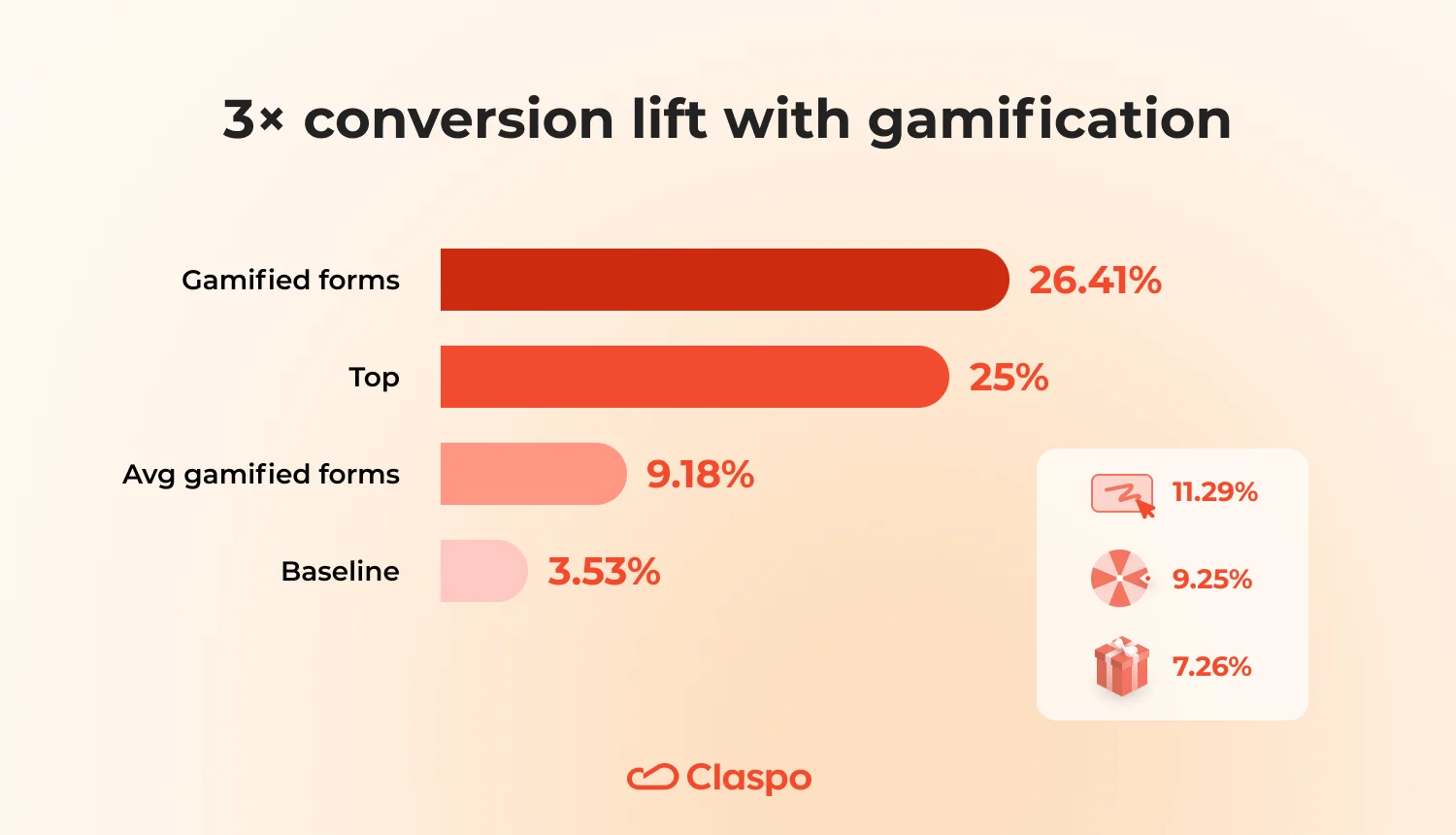
First, let's look at the baseline. As we mentioned, standard forms sit at a sleepy 3.53%. But when we looked at the average for gamified forms, that number tripled to 9.18%. That is a nearly 3x lift just by picking up a tool. And for the “Elite” marketers (the top 25% of widgets we analyzed), CR skyrocketed to an astonishing 26.41%.
But here is the twist: The Hammer isn't always the winner. Most marketers assume the Spin-the-Wheel widget is the king of conversion. While it is the most popular tool in the box, our data shows it isn't always the sharpest.
- “Spin to Win” campaigns averaged a respectable 9.25% CR.
- Scratch Cards actually outperformed, averaging 11.29%.
The data prove that digital curiosity (scratching to reveal, the precision tool) often outperforms digital gambling (spinning to win, the blunt-force tool).
Product: The Claspo Toolbox
Being marketers ourselves, we want you to have a full contractor's kit, not just a hammer. Here is the breakdown of 6 distinct gamification mechanics in your new box:
Shake the Tree

The seasonal booster. A holiday-exclusive mechanic that turns passive traffic into active leads through play.
Why it works: Context is king. It matches the user's festive mood. Instead of interrupting their holiday shopping with a generic form, it hands them a digital toy that fits the season.
The benefit: Relevance. It drives a 15% uplift in engagement during Q4 by making your marketing feel like part of the celebration.
Memory Cards

The focus engine. Based on the childhood classic “Memory Match,” this widget requires the user to find a pair of identical pictures to unlock a reward.
Why it works: It creates a “Cognitive stop.” While other games are over in a matter of seconds, this is a moderately difficult task that forces the user to pause, think, and interact.
The benefit: Dwell time. It diversifies your popups and significantly increases time on site, sending positive signals to search engines while entertaining the user.
Slot Machine
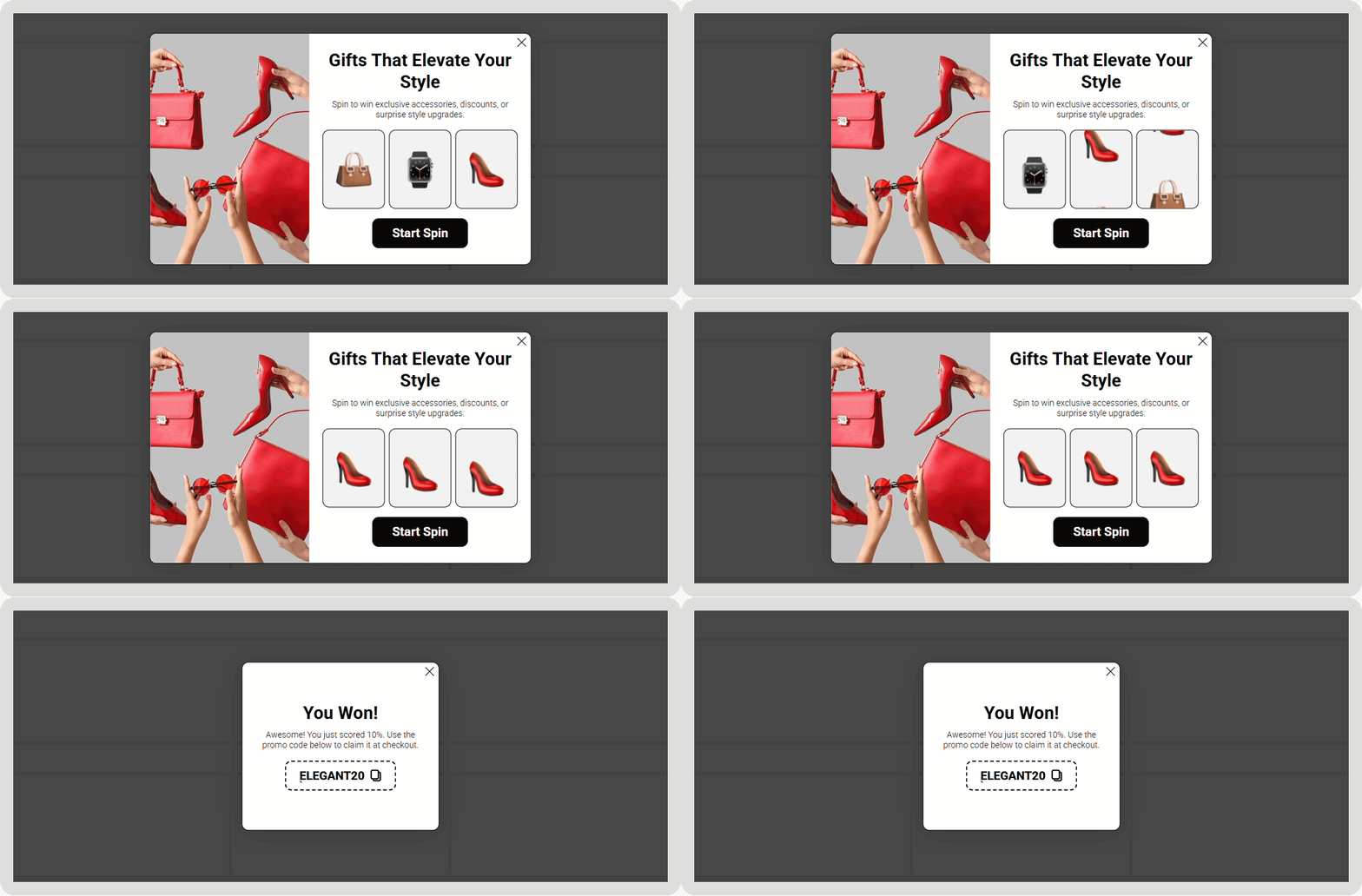
The spark. A high-energy format that mimics the “Jackpot” visual of lining up three matching symbols.
Why it works: It frames the discount as a “lucky break.” The spinning reels create a moment of focus, making the user feel like they beat the odds to get their reward.
The benefit: Novelty. It breaks banner blindness effectively for users who are tired of standard wheels, making it perfect for “Big Win” campaigns.
Spin the Wheel
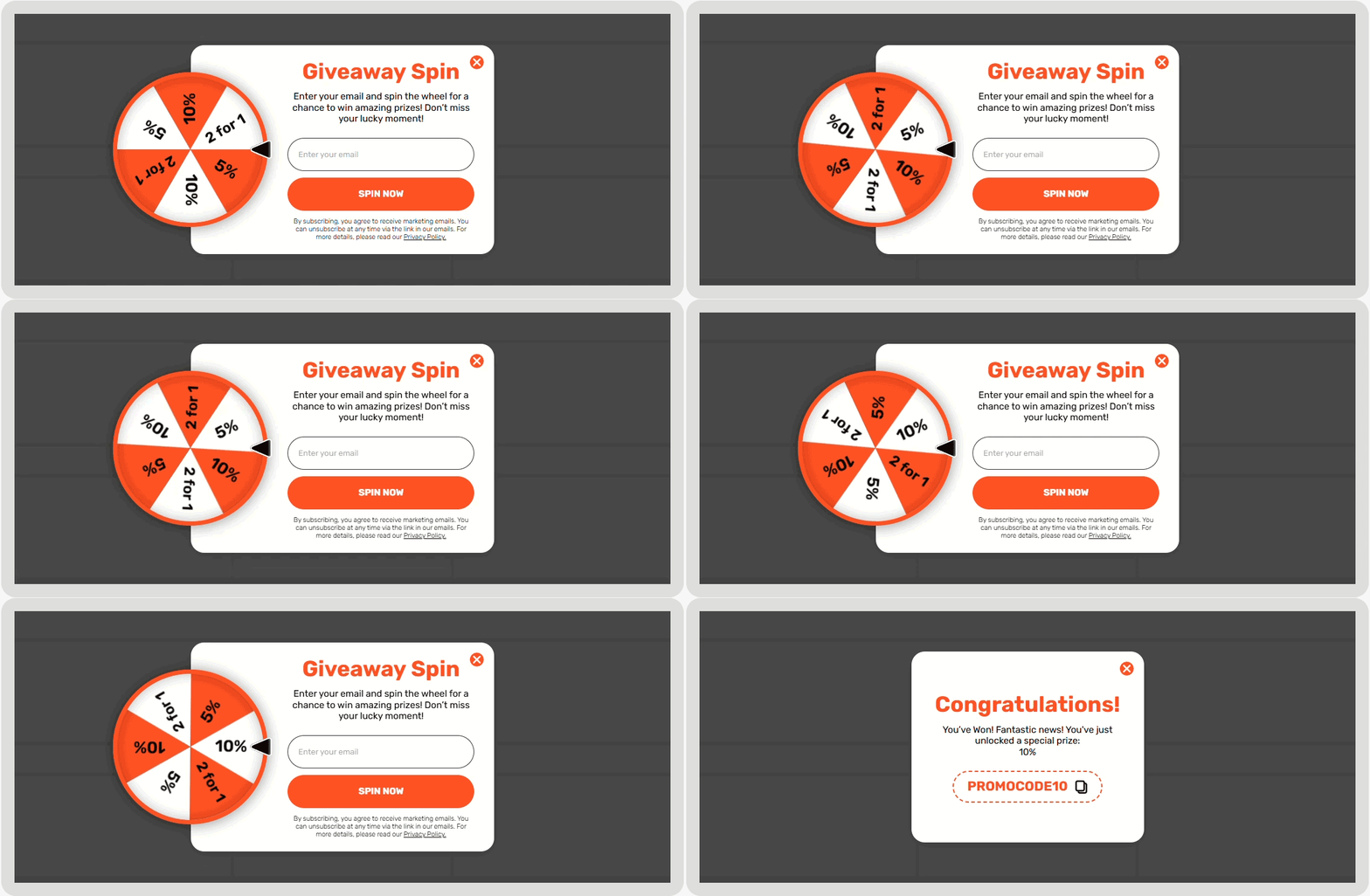
The sledgehammer of your toolkit. It is the classic high-converter — a proven, instantly recognizable mechanic that captures attention through sheer visual impact.
Why it works: It triggers pure anticipation. The visual motion of the spin creates a micro-moment of suspense that releases dopamine, making the interaction feel rewarding before the prize is even won.
The benefit: Maximum volume. It is the best tool for driving mass leads from cold traffic.
Pick a Gift
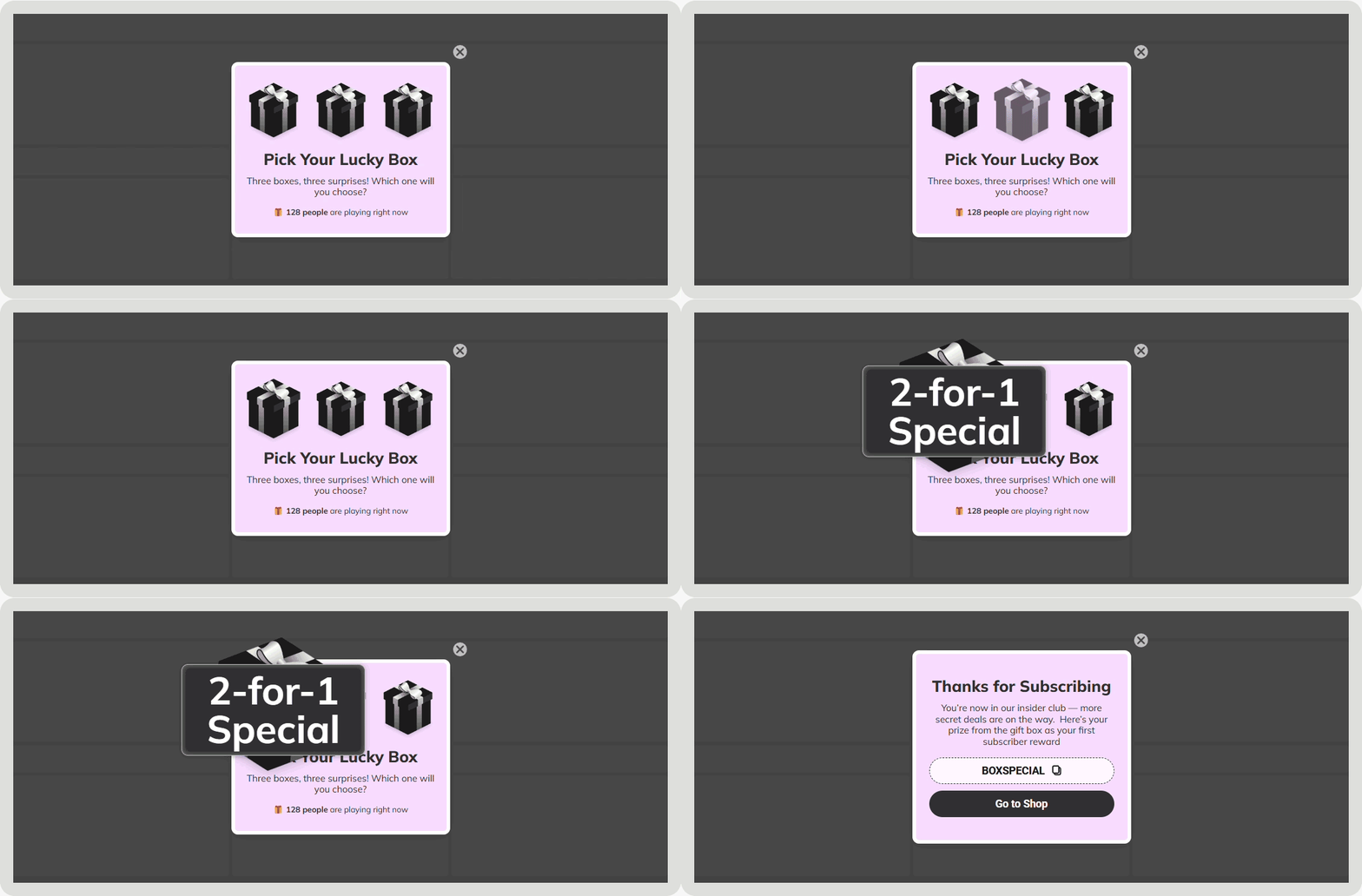
The key to the sale. Present a lineup of mystery boxes to your website visitors and put the choice in their hands.
Why it works: This is the Endowment effect in action. Because the user selected the box themselves, they psychologically feel that the prize inside belongs to them. This effect makes it much harder to walk away from the prize.
The benefit: Higher commitment. Users are statistically more likely to redeem a coupon they “chose” than one that was randomly assigned to them.
Scratch Card
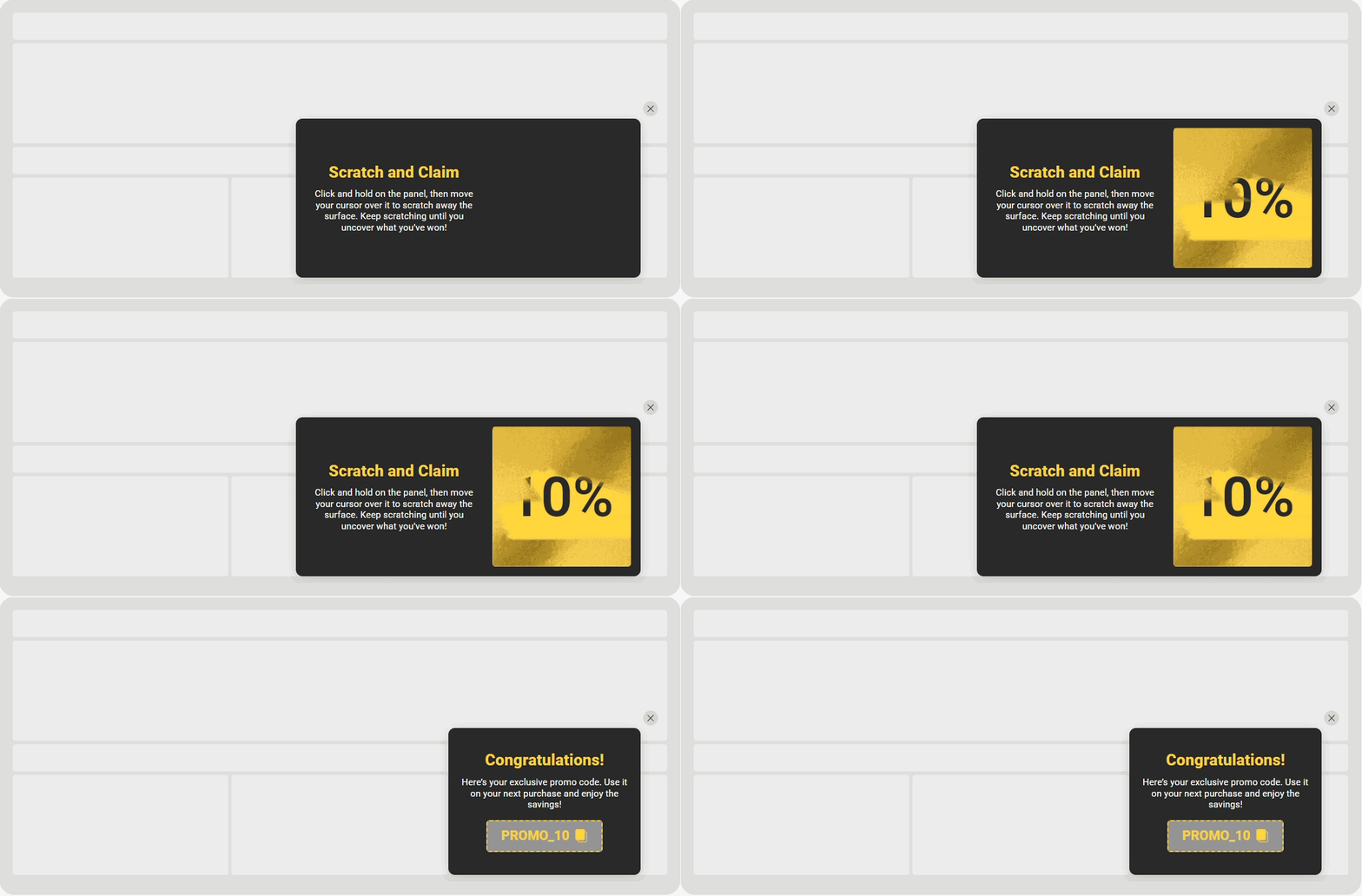
The precision screwdriver. A simple “reveal” mechanic that compels users to rub the screen to check their prize.
Why it works: It exploits the “Curiosity gap.” Humans hate unfinished business. When a visitor sees a covered code, it tingles a psychological itch that needs to be scratched (pun intended).
The benefit: Mobile dominance. It is touchable and compact, delivering the highest CR on small gadgets. And most importantly, it doesn’t clog the user experience.
Playbook: The Goal-to-Game Matrix
Here is your renovation cheat sheet. Find your goal below, and we will tell you which tool to pull from the box.
Goal 1: Email List Growth (Max volume)
You are driving cold traffic from social media and need to capture leads fast.
- The tool: Spin the Wheel or Slot Machine.
- Why: These are low-friction, high-dopamine games. The rules are instant (“Spin to Win”), requiring zero cognitive load. Like a hammer, they break down resistance through sheer impact. You can expect CR between 9 and 11%.
Goal 2: Sales & Revenue (High Intent)
A user is browsing but hesitant. You need to get them across the finish line, and ideally, boost the cart size while you're at it.
- The tool: Pick a Gift.
- Why: It’s about ownership. The moment a user selects a box, the prize inside becomes personal property. It stops being a random lottery number and becomes a choice they made. At the end, it is not perceived as a marketing promo but more like a personal win.
Goal 3: Engagement & Brand Affinity
Your goal is to keep visitors on the page longer and give them a reason to remember you.
- The tool: Memory Cards.
- Why: This utilizes the “Ikea effect” — we value things more when we put effort into them. By solving a simple puzzle, the user invests mental energy into your brand. It turns a transaction into a nostalgic, fun interaction.
Goal 4: Seasonal Spikes (Q4)
Whether it’s Black Friday or Christmas, you'd better make your email stand out from among the 50 other emails your customer has received that day.
- The tool: Shake the Tree.
- Why: Context is king. Our data shows a 15% uplift in engagement when widgets match the seasonal vibe. It turns a boring “Sales Notification” into a festive toy.
Goal 5: Mobile Lead Capture
You have heavy mobile traffic, and standard popups are annoying your users and blocking the screen.
- The tool: Scratch Card.
- Why: It is tactile. On mobile, the act of “rubbing” the screen to reveal a code feels incredibly satisfying. It takes up less visual space than a wheel but drives higher engagement because users can't resist the urge to “clean” the card. This was the highest converter in our benchmark at 11%+.
Next Step
You wouldn't hire a contractor who only has a hammer. Don't run a marketing strategy that relies on a single wheel.
Identify your goal, open the Claspo toolbox, and select the mechanic that gets the job done right.