
How G-MOS & Claspo Strengthen the Funnel From Traffic to Conversion
Marketers often invest time and budget into attracting the new audience. Unfortunately, many of those visitors exit the next moment they land on a website. The issue is the disconnect between how users arrive and what they experience next.
Pop-ups and well-timed ads can bridge that gap, but only when they’re driven by real intent and tailored to the user’s journey. G-MOS and Claspo strengthen different parts of the customer journey.
G-MOS automates and constantly updates Google Ads based on your product or service feed, ensuring campaigns stay accurate, relevant, and efficient at scale. Claspo complements this by optimizing what happens after the click, adapting on-site experiences to user behavior and guiding visitors toward meaningful actions with popups. Next, we’ll unpack how each platform contributes to a more conversion-driven funnel.
The Traffic–UX Alignment Problem
Traffic quality loses its value the moment every user is greeted with the same message, the same offer, and the same journey regardless of what brought them in.
At the same time, on-site UX teams rely on behavioral cues to craft high-performing experiences, but without upstream context, they’re designing for an “average visitor” who doesn’t actually exist. A polished interface can’t fix a mismatch between the promise made in the ad and the experience delivered on the page.
The root issue is that acquisition and on-site experience typically move on separate tracks. Media teams tune audiences, bids, and creatives, while product or UX teams refine layouts and interactions. Yet the user experiences these as one continuous journey. When those layers don’t communicate, conversion rates plateau, no matter how many individual optimizations you make.
A combined approach solves this. When traffic segmentation determines what a visitor sees, and real-time on-site behavior informs future targeting, each click gets a clearer path forward. Instead of pushing users through a rigid flow, marketers guide them with experiences shaped by intent, not guesswork.
Two users may cost the same to bring in, but their conversion potential depends entirely on the promise they saw, the reason they clicked, and the experience they expect next. High-value visitors show clearer intent, stronger engagement signals, and a smoother shift from ad to landing page. Low-quality traffic lands without context, clicks out of curiosity, or arrives from sources misaligned with your message.
This is why not all clicks carry the same value. The goal is to identify high-potential segments — users who demonstrate both intent and fit — and guide them through a tailored experience. When you understand who is arriving and why, your entire funnel becomes more predictable and more profitable.
Today’s funnels demand more than strong ads and clean UX. Marketers need a system that understands who is arriving, what they want, and how to move them forward without friction. G-MOS and Claspo illustrate how two complementary layers — traffic intelligence and on-site engagement — work together to create a more predictable path to conversion.
The G-MOS + Claspo Stack Explained
A modern funnel is a constant negotiation between user intent, messaging relevance, and timing. To make that negotiation work in your favor, marketers need two synchronized layers: intelligent traffic acquisition and context-aware on-site engagement. The G-MOS + Claspo stack illustrates how these layers can operate as a single system.
Smart Acquisition with G-MOS
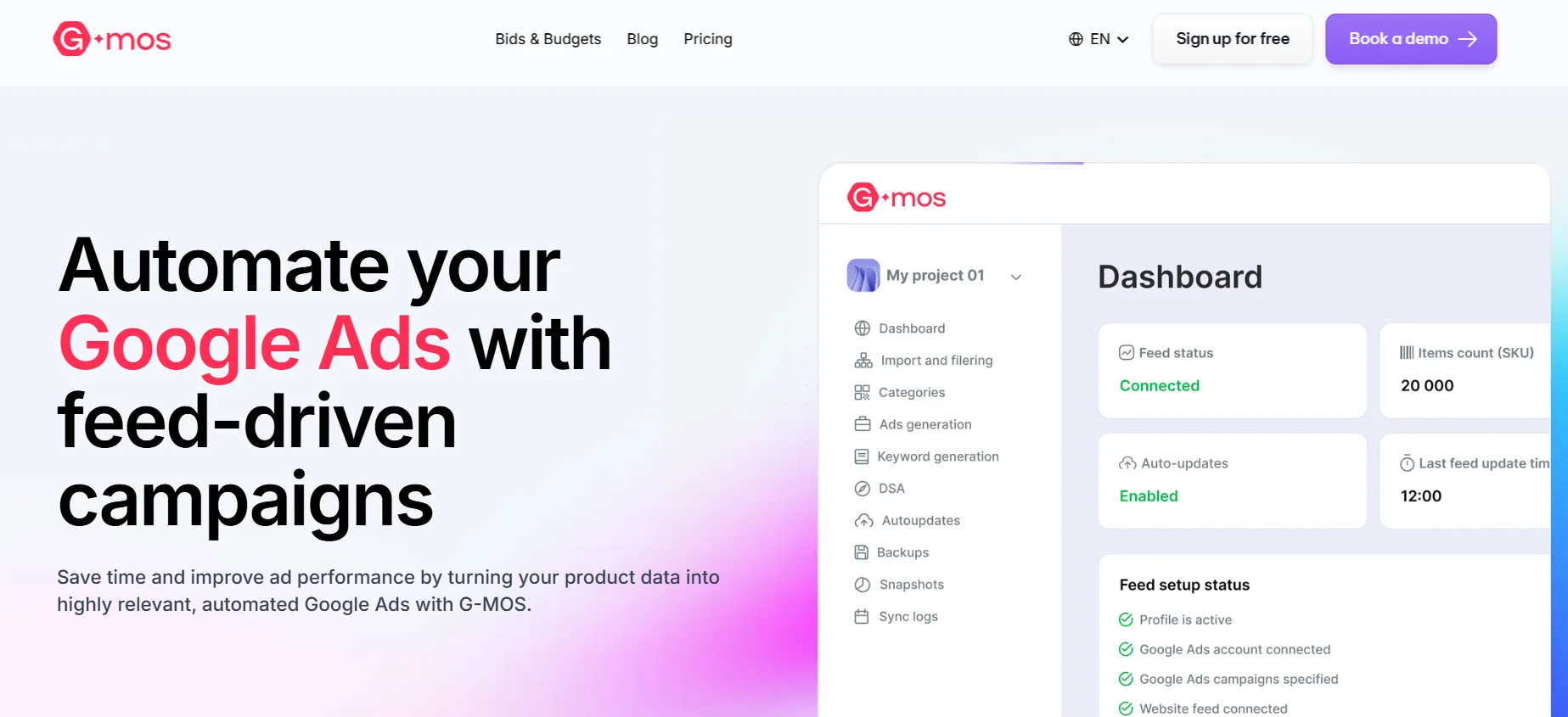
G-MOS acts as the intelligence layer at the top of your funnel. Instead of pushing the same ads to everyone, it uses feed-based automation to reflect real-time catalog, price, or inventory changes — an advantage for ecommerce and fast-moving categories.
G-MOS strengthens the very first stage of your funnel by making acquisition not just automated, but intent-aware. G-MOS generates and updates Google Ads directly from your product or service catalog. It keeps each ad aligned with real-time pricing, availability, and item details. For teams managing large or constantly changing inventories, this replaces manual updates with a system that stays accurate on its own.
Ads stay relevant automatically, and every dollar works harder because you’re optimizing for likelihood to convert, not simply volume.
If you’re exploring this approach for the first time, G-MOS offers premium onboarding to speed up the setup. To claim this deal, book a call and reference “Claspo” during the session.
Context-Aware Conversion Optimization with Claspo
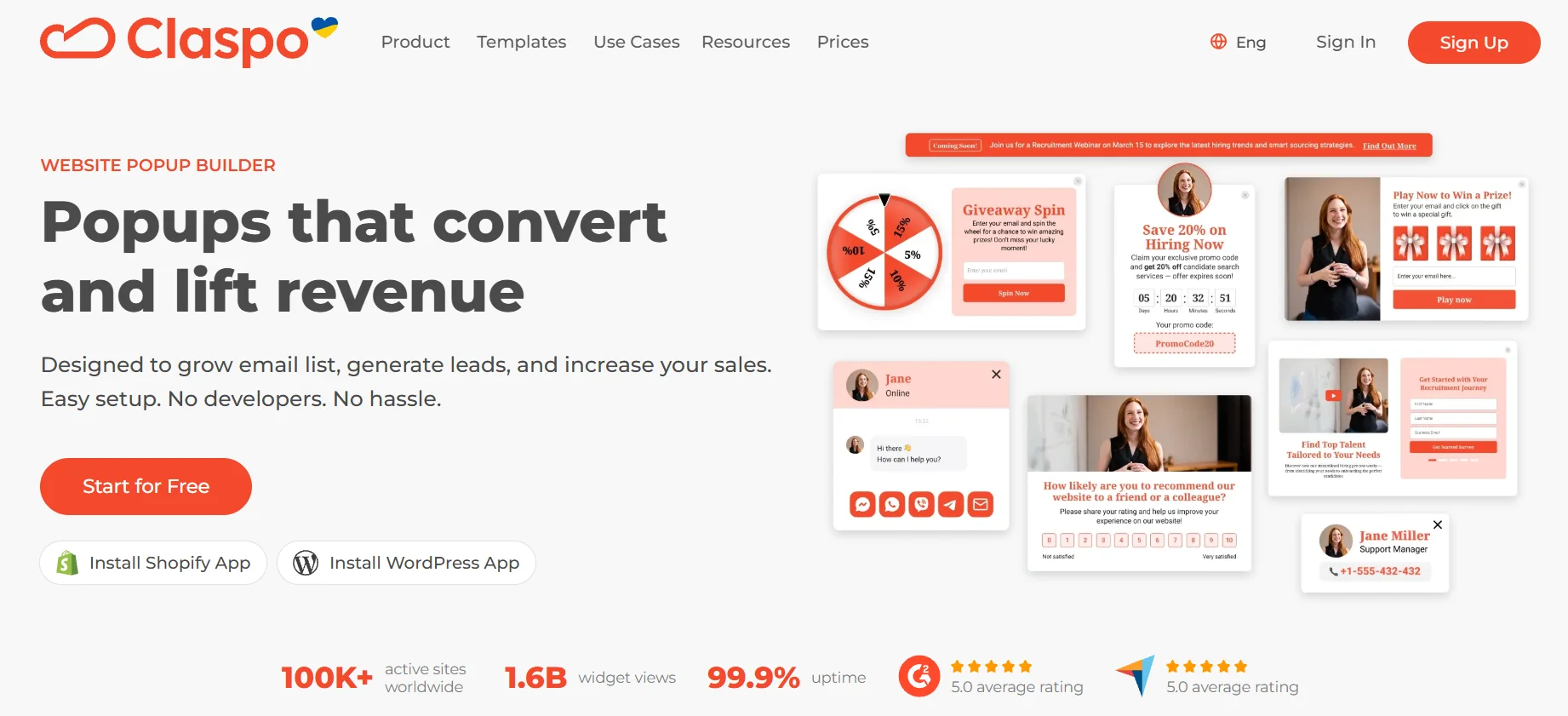
Once visitors arrive, Claspo takes over by shaping the experience around who they are and what they do. Instead of sending everyone through the same static experience, Claspo adjusts on-site interactions based on each user’s segment and behavior.
Its toolkit including targeted pop-ups, gamified offers, and personalized CTAs helps guide visitors toward relevant micro-conversions.
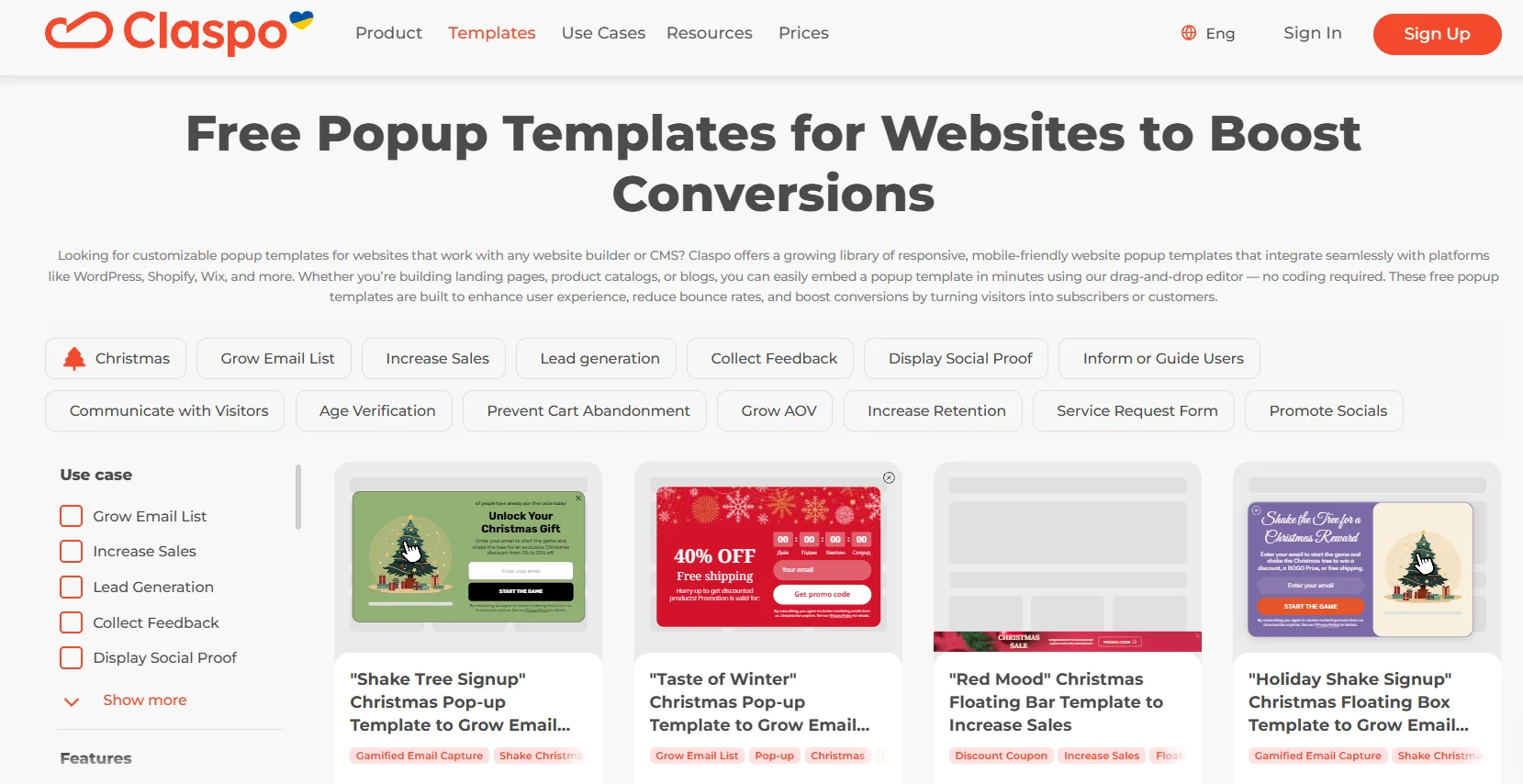
With triggers like scroll depth, exit intent, and engagement time, each interaction appears precisely when it’s most useful.
How On-Site Behavior Improves Acquisition
The behavior users show on your website is an indicator of who your ideal audience is. When you see which visitors explore products, interact with popups, complete micro-conversions, or hesitate at specific steps, you gain insight into what real intent looks like and which segments consistently deliver it.
These patterns become a guide for acquisition. If certain campaigns bring in users who scroll deeper, or convert at higher rates, those sources deserve more budget. If other audiences bounce immediately or ignore key elements, it’s a signal to refine targeting, adjust messaging, or rethink how expectations are set before the click.
By capturing and analyzing on-site behavior, marketers build a feedback loop that informs future traffic decisions. Each interaction helps clarify who is worth attracting, which channels perform best, and how to fine-tune ad targeting. Over time, acquisition becomes more efficient, and the funnel more predictable. What's best is that it's all driven by the real behaviors happening on the site, not assumptions.