Popup Targeting: Why New vs Returning Visitors Isn’t Enough

Summarize
Ecommerce popup targeting has a quiet profitability problem: the same offer can be a growth lever for one visitor and a margin leak for another.
A first-order discount makes sense when it helps convert someone truly new. It becomes harder to justify when it reaches an existing subscriber, previous buyer, or shopper who came back from an email campaign already warmed up. The campaign may still show views, submissions, and conversions. The harder question is whether those actions came from the right people.
That is why “new vs returning visitors” targeting is no longer enough. It tells you something about the session, but not whether the visitor is already known to the brand, already subscribed, already converted, or ready for a different next step.
In this article, we’ll break down what weak visitor recognition costs ecommerce brands, why basic popup targeting misses known visitors, and how relationship-aware popups can help protect discounts, keep signup intent cleaner, and move visitors through the customer journey with fewer wrong offers.
TL;DR
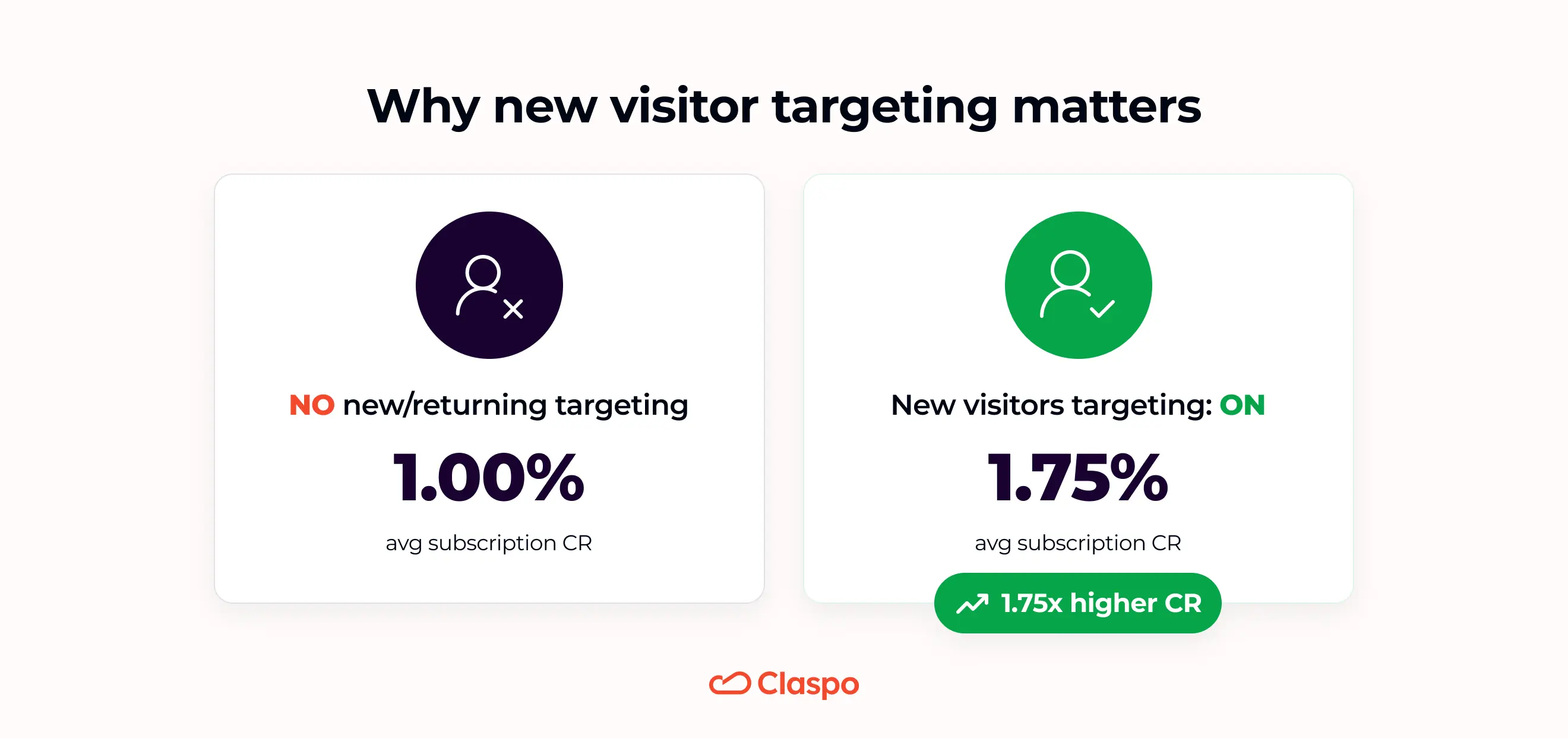
New vs returning visitor targeting still matters, but it is only the first layer. In Claspo’s B2C pop-up data, widgets targeted to new visitors converted visitors into subscribers 1.75x better than popups without active new/returning targeting.
The bigger opportunity is visitor recognition. Ecommerce brands need to know whether a visitor is truly new, already subscribed, already converted, or already a customer before showing acquisition offers.
Weak recognition can turn useful discounts into margin leakage. A welcome offer works when it brings in real new customers. It becomes expensive when existing subscribers or previous buyers receive a discount they did not need to convert.
Post-submission suppression keeps campaigns cleaner. In our analysis of B2C popups with 953M+ impressions, popups that stopped displaying after form submission averaged 3% subscription CR, compared with 0.46% when this rule was not active — about 6.5x higher average subscription conversion.
The future of ecommerce popup targeting is multi-signal and relationship-aware. Better visitor recognition should combine six signal groups: visit and submission history, platform context, email/SMS click parameters, identified third-party cookies, analytics history, and SDK identity signals.
The problem: most popups still treat visitors like strangers
Most ecommerce popup targeting still works with signals that are easy to see on the surface. A visitor lands on a product page. They come from Instagram. Maybe they browse on mobile, read just enough to look interested, or come back after checking the same collection yesterday. For most pop-up tools, that is where the targeting logic starts:
page visited;
device type;
country;
traffic source;
time on page;
scroll depth;
exit intent;
new vs returning visitor.
These rules have their place. You still want to know whether someone is on mobile, where they came from, and whether they have seen the same campaign before. That is session context. It helps you decide when to show a pop-up.
But there is one problem: these signals do not answer the question ecommerce marketers actually care about: Is this person already known to us? Because “visited this page” is not the same as “already subscribed”. “Returning visitor” is not the same as “customer”. “Came from email” is not the same as “cold traffic”. And “new to this browser” definitely does not mean “new to the brand”.
That gap is where popup targeting starts to break. A subscriber sees another newsletter signup popup. An existing customer gets a first-order discount. A VIP customer gets the same generic “Join our list” message as someone who discovered the store 10 seconds ago.
Technically, the pop-up worked. It followed the rule. Strategically, it missed the relationship. And this is where a lot of ecommerce popup targeting becomes awkward. Not because the pop-up is badly designed. Not because the offer is weak. But because the campaign treats a known visitor like a stranger.
At low traffic, this kind of mismatch is easy to dismiss. A few people see the wrong pop-up — not ideal, but not dramatic. At scale, it starts to leak money and data quality at the same time.
New vs returning is not the same as known vs unknown
For years, “new vs returning visitors” has been one of the most common rules in popup targeting. It makes sense at first glance. New visitors may need an acquisition offer. Returning visitors may need a reminder, a stronger incentive, or a different message. That logic is still useful.
The data backs up the value of visitor status. In our B2C ecommerce benchmark, based on popups with more than 950 million views, widgets targeted to new visitors converted visitors into subscribers at an average rate of 1.75%. Widgets without active new/returning visitor targeting averaged 1%. That is 1.75x higher subscription conversion from one fairly basic distinction.
So no, the problem is not that new vs returning targeting does not matter. It does. The problem is stopping there. Knowing that someone is “new” or “returning” is helpful, but it describes browser behavior. It does not describe the visitor’s relationship with your business.
There are two different layers here:
Layer | Common values | What it actually tells you |
Lifecycle | New / Returning | Has this visitor been here before? |
Relationship status | Unknown / Known | Is this person already recognized as a lead, subscriber, or customer? |
Reports may put these people into neat boxes. Real shoppers are messier.
One visitor can return three times and still be anonymous. They browsed, compared, maybe almost bought — but never subscribed, never logged in, never gave you a usable signal.
Another visitor can look “new” to the site because they opened the store from a different browser. But they came from your email or SMS campaign, so treating them like cold traffic makes no sense.
A visitor can be known but not a customer. They may be a subscriber, lead, giveaway participant, quiz respondent, or someone who joined the list during a previous campaign. Showing them the same email signup popup again does not grow your list. It just asks them to do something they already did.
A visitor can be known and already purchased. That person does not need a first-order discount. They may need a loyalty offer, a cross-sell, a replenishment reminder, early access, or a message based on their previous order.
This is why “new vs returning visitor popup” logic can only take you so far.
It helps you understand visit history. It does not tell you whether the visitor is anonymous, subscribed, converted, loyal, or already sitting in your VIP segment. And that distinction matters. Because the best onsite experience is not built around the question, “Has this person been here before?” It is built around a sharper question: “What does this visitor already mean to our business — and what should they see next?”
That is the shift from basic popup targeting to visitor recognition. And shoppers are already expecting it. Six in 10 Americans say they are more loyal to retailers that show they “know” them through personalized experiences and offers. So no, recognizing a subscriber or customer before showing a pop-up is not some fancy personalization trick. It is basic ecommerce manners at this point.
What weak visitor recognition costs ecommerce brands
Weak visitor recognition can hide behind decent-looking campaign numbers. A pop-up gets impressions, a few people submit the form, and nothing looks obviously broken.
But the real question is what happened behind those numbers. Some discounts may go to people who already knew the brand. Some submissions may come from existing subscribers. Some high-intent visitors may get a beginner offer when they were ready for something more relevant.
First-order discounts become margin leakage
Welcome offers can be useful. In fact, email sign-up offers and discounts are still seen as a cart conversion tactic: 29% of respondents said they help conversion across ecommerce platforms.
But that is exactly why targeting matters. A welcome discount is supposed to buy something: a new email, a first purchase, or at least a cleaner path toward both. When an existing subscriber or customer gets that same offer, the store is no longer buying acquisition. It is giving away margin to someone who was already inside the audience.
A simple margin example makes this easier to feel. The exact numbers will vary by category, so let’s keep the example intentionally simple: a $100 product with a 40% gross margin gives the store $40 before any discount.
Now add a welcome offer. A 10% discount takes $10 off the order. Since product cost does not shrink with the discount, gross profit falls to $30. To end up with the same $40 in gross profit, the store needs roughly one-third more orders that would not have happened otherwise.
A 20% discount is where the math gets much less cute. Gross profit falls to $20, so the store needs twice as many truly incremental orders just to land in the same place.
That is why the word “incremental” matters. If the buyer was already likely to purchase, the discount did not create new revenue. It only made the order cheaper for them and less profitable for the store.
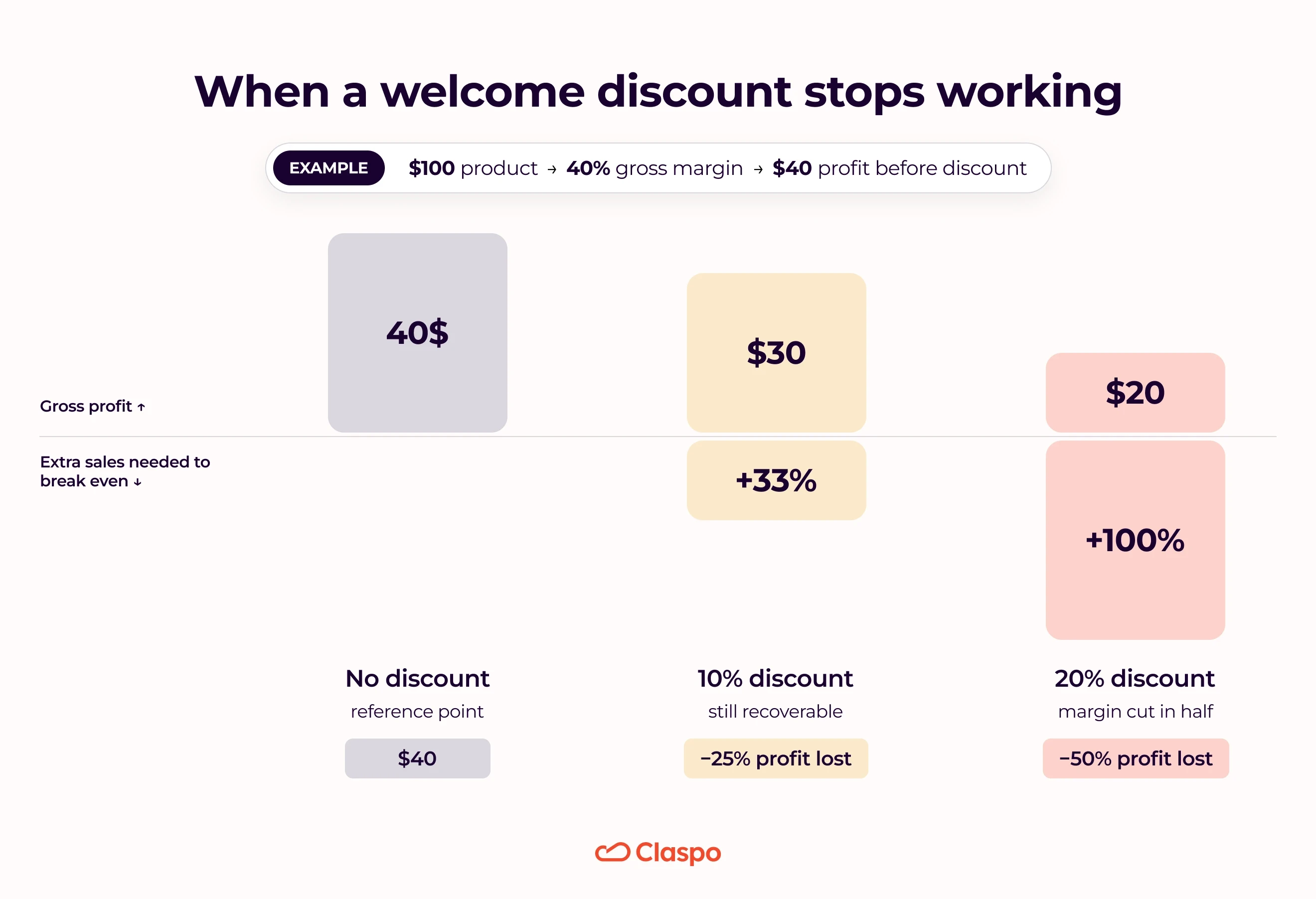
That can make sense when the offer brings in real new customers. It makes much less sense when an existing subscriber gets the code because the pop-up did not recognize them.
Re-signups make pop-up performance harder to read
When an existing subscriber sees the same newsletter pop-up again, the problem is not always a duplicate contact. Many ESPs can recognize the same email address and avoid creating a second profile or list membership.
But a repeated form submission can still make pop-up performance harder to interpret. The campaign may show more submissions, while the list does not grow by the same number of real new subscribers. And if a shopper uses another email address just to get the code, the brand may technically collect a “new” contact, but not a new relationship.
To see how this works in real campaigns, we analyzed B2C popups created by Claspo users. Together, the widgets in this comparison generated more than 953 million impressions.
Popups that stopped displaying after a successful form submission averaged a 3.00% subscription CR. Widgets where this rule was not active averaged 0.46%.
That is about 6.5x higher average subscription CR.
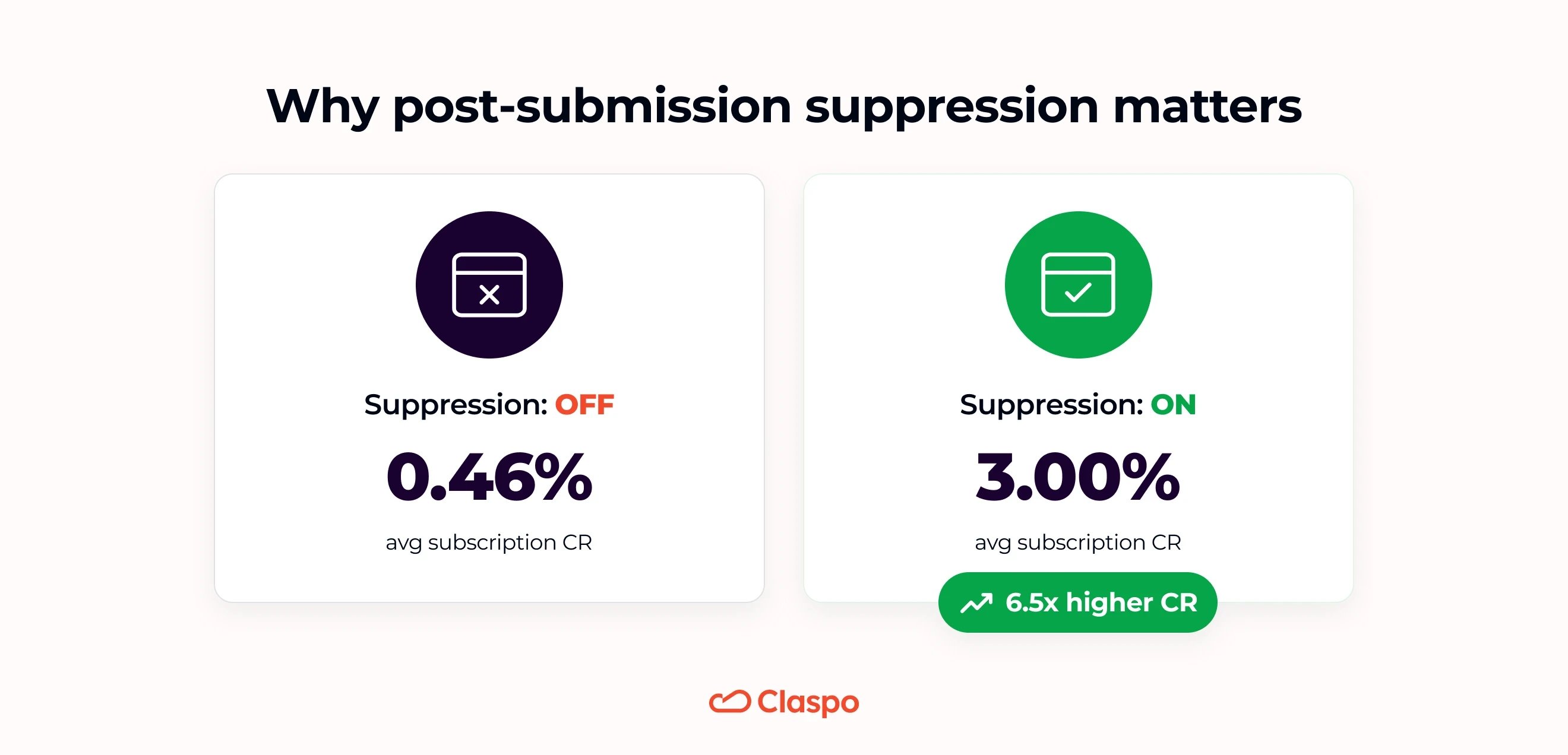
The pattern is hard to ignore: when a pop-up stops chasing people who have already converted, its impressions stay focused on visitors who can still become real new subscribers.
The customer experience starts to feel careless
There is also the plain human part. A customer clicks from your email, lands on your store, and gets asked to join your email list. From the brand’s side, this may be a targeting gap. From the customer’s side, it feels like the store has no memory.
Consumer research suggests that, for many shoppers, the relationship does not start after the first purchase. It starts earlier. Once they create an account or sign up for emails, 32% of Americans want relevant offers and recommendations right away, from the first interaction with the brand.
So when a subscriber sees another generic signup pop-up, the issue is not only the repeated form. It is the broken expectation: “I already gave you my email. Why are you acting like I didn’t?”
That kind of mismatch is especially rough for premium brands, loyalty programs, subscriptions, and high-AOV stores. These businesses work hard to create a sense of relationship. A generic signup pop-up can undo part of that work in two seconds. This is where visitor recognition becomes part of the customer experience, not just a campaign rule.
High-intent visitors get the wrong next step
A subscriber coming from an email has already raised a hand. The pop-up should not restart the relationship from zero. It can use that visit to continue the conversation: show a perk for people on the list, bring back a product they looked at, remind them to restock something they bought before, or give VIP customers early access before everyone else sees the campaign.
This is the real cost of weak visitor recognition: the brand does not only show the wrong pop-up. It misses the chance to move a known visitor forward.
Why basic popup targeting misses known visitors
At this point, the obvious question is: if the brand already has customer data somewhere, why does the pop-up still get it wrong?
Popup tools often depend on their own cookies
Many tools recognize a returning visitor only after their own script has seen that browser before. That creates a few obvious gaps:
after a new install, even loyal customers may look “new” to the tool;
cleared cookies can reset recognition;
a new browser or device can make a known person look anonymous.
Cookies and local storage are still useful. They can help with frequency limits, form suppression, visit history, and basic new vs returning visitor pop-up logic. But they are not a stable identity.
Privacy settings can wipe out that memory pretty quickly. A shopper clears cookies, Safari shortens storage life, or the same person opens the store from another device — and suddenly “returning” becomes a shaky label.
That is why “returning visitor” is a useful clue, but not a stable identity signal. It describes browser history, not the full relationship with the brand.
ESP, Shopify, CRM, and pop-up data live in separate places
Your ecommerce stack may already know a lot about the person on the site. The ESP may know they are subscribed. Shopify may know they have purchased before. A CRM may store their lead status, tags, consent, or customer segment. But the pop-up does not automatically inherit all of that context.
There is a difference between having a customer profile somewhere in the stack and recognizing that profile during the current onsite session.
For example, Klaviyo’s Shopify targeting rules show this problem clearly. Depending on customer privacy settings, Klaviyo may not track onsite events or apply certain form targeting rules for visitors in regions such as the EU, EEA, UK, and Switzerland unless they have provided consent.
That creates an important gap. A visitor may already exist as a subscriber. But if they are not identified during the site visit, Klaviyo cannot always treat them as one when deciding whether to show a form.
For advanced popup targeting, that matters. It is not enough to store customer data somewhere. The pop-up needs a reliable way to use the right identity signals at the moment it decides what to show.
Email and SMS clicks carry signals that often get ignored
Sometimes the visitor brings the recognition signal with them. When someone clicks from an email or SMS, the URL often contains clues that this person came from an existing contact channel. It may be an ESP identifier, a campaign parameter, or something as simple as utm_medium=email.
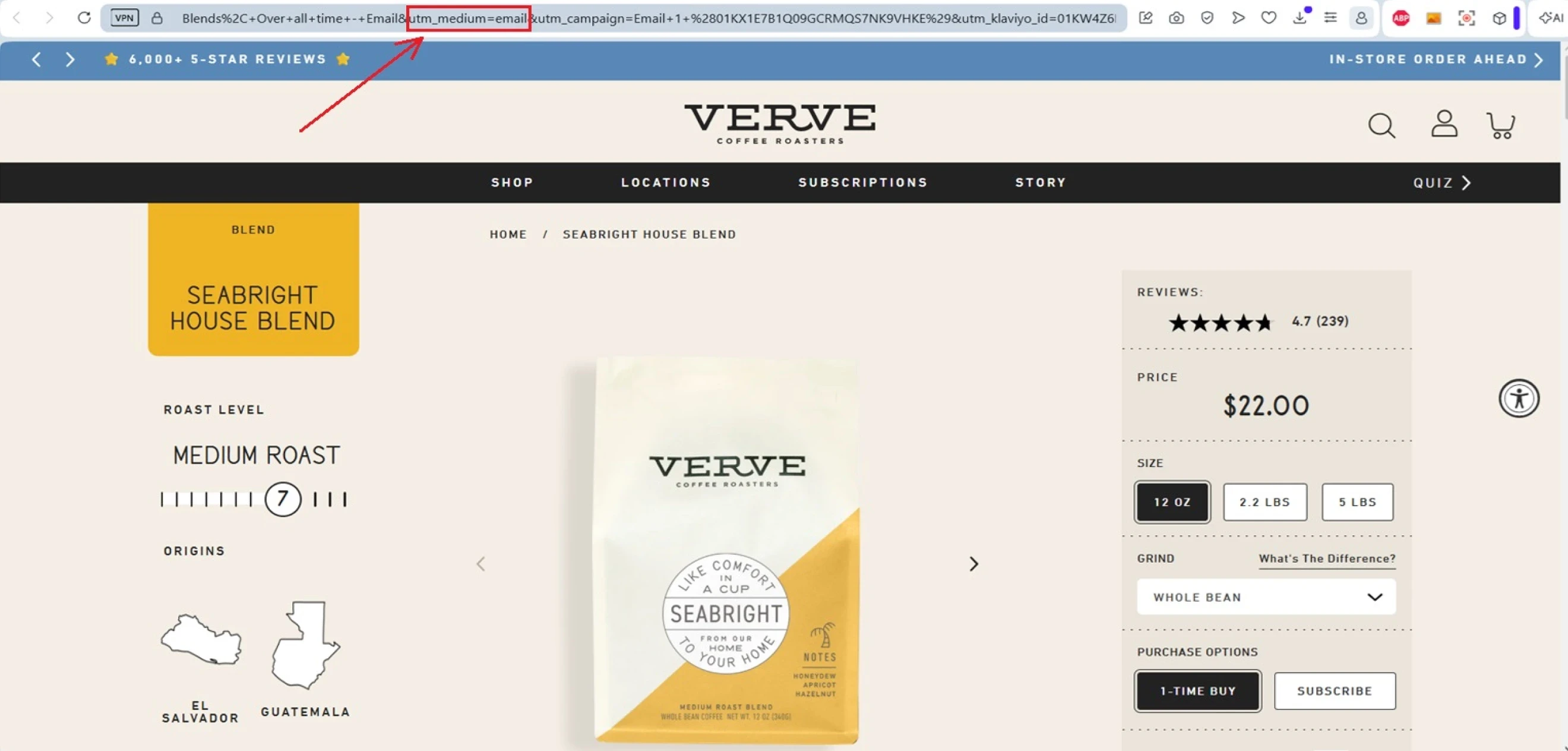
Different platforms add these markers in different ways. The exact parameter matters less than the signal itself: this person came from email, SMS, or another channel where the brand already had some kind of relationship with them.
The catch is timing. A shopper clicks the email, opens a product page, then browses somewhere else before the pop-up appears. If the pop-up tool does not save the original campaign data, that clue can be gone by the second pageview. So the campaign ends up reacting to the page the visitor is on now, while missing the signal that brought them there in the first place.
A click will not tell you the whole customer story. But it can help separate truly anonymous visitors from people who are already in your audience — if the system keeps the signal long enough to use it.
So the root problem is not only that pop-up tools miss certain signals. It is that many campaigns still make decisions from a narrow view of the visitor. To fix that, marketers need to change the question behind the targeting logic.
From pop-up targeting to visitor relationship targeting
To understand what ecommerce teams need from advanced popup targeting, we looked at real questions from Claspo users — the kind that come through support and customer success when marketers are trying to make onsite campaigns work in practice. In short, marketers want visitor status to become a part of the display logic.
Not just “show this pop-up on this page” or “show it after 10 seconds”, but also “show it only if this person is still the right audience for this message”.
That is the shift from basic visitor targeting to relationship-based ecommerce popup targeting. The more a brand knows about a visitor, the less sense it makes to treat every session as a fresh start.
Instead of asking only: “Should this pop-up appear on this page?” A better question is: “What should this visitor see next, based on what we already know about them?” Look at the possible framework:
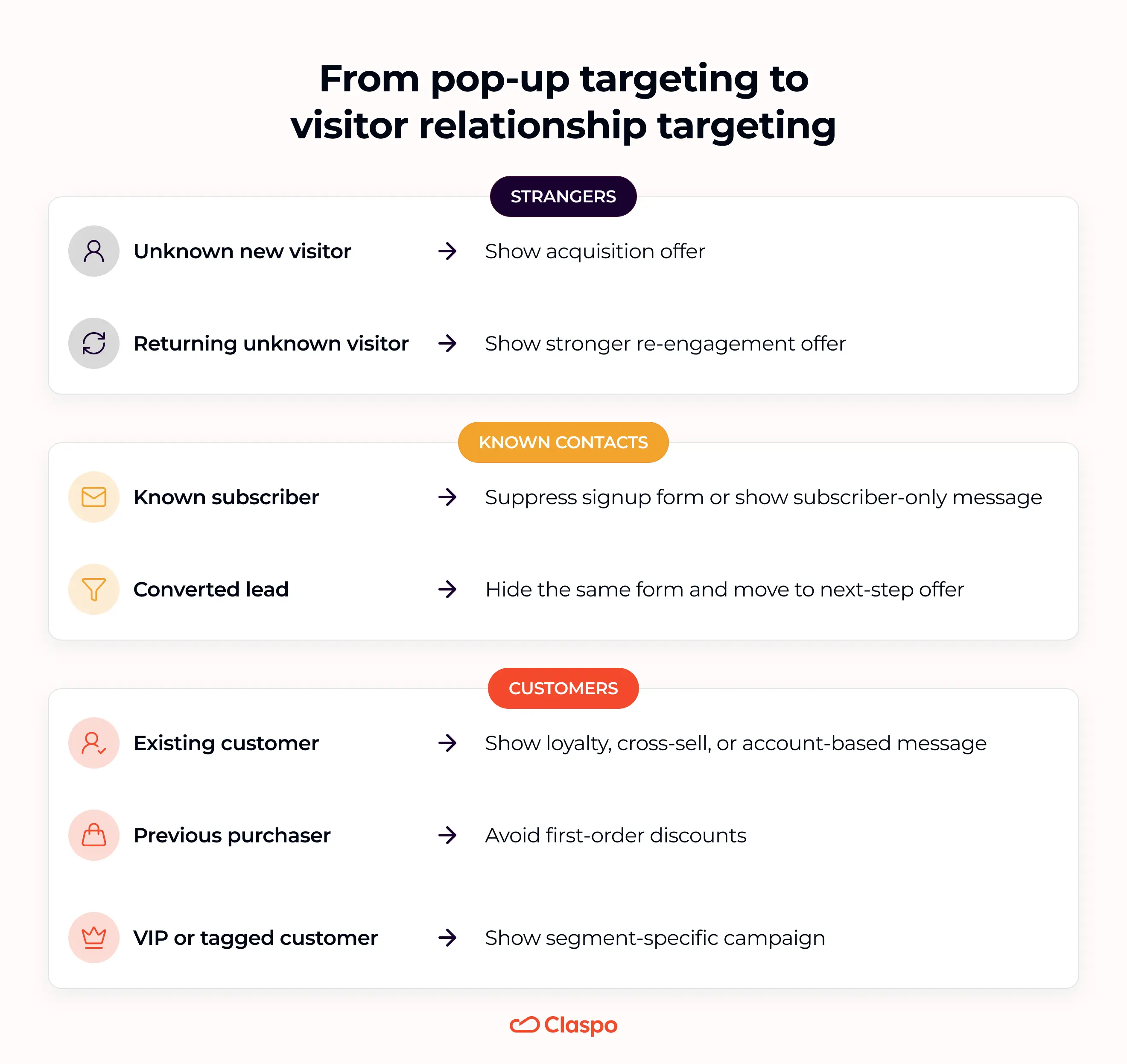
This is where visitor recognition becomes more than a suppression rule. It helps the brand decide whether the pop-up should appear at all — and if it should, what role it should play in the customer journey.
Better visitor recognition needs more than one signal
The answer is not to replace cookies, or ESP data with one “better” identifier. That would only create another single point of failure. Advanced popup targeting needs a layered recognition model: several signals working together, with fallback logic for moments when identity is incomplete.
The goal is not perfect identification. In ecommerce, that is rarely realistic. The goal is to give the pop-up enough context to make a better decision than “this browser looks new”.
A stronger visitor recognition layer can combine six signal groups.
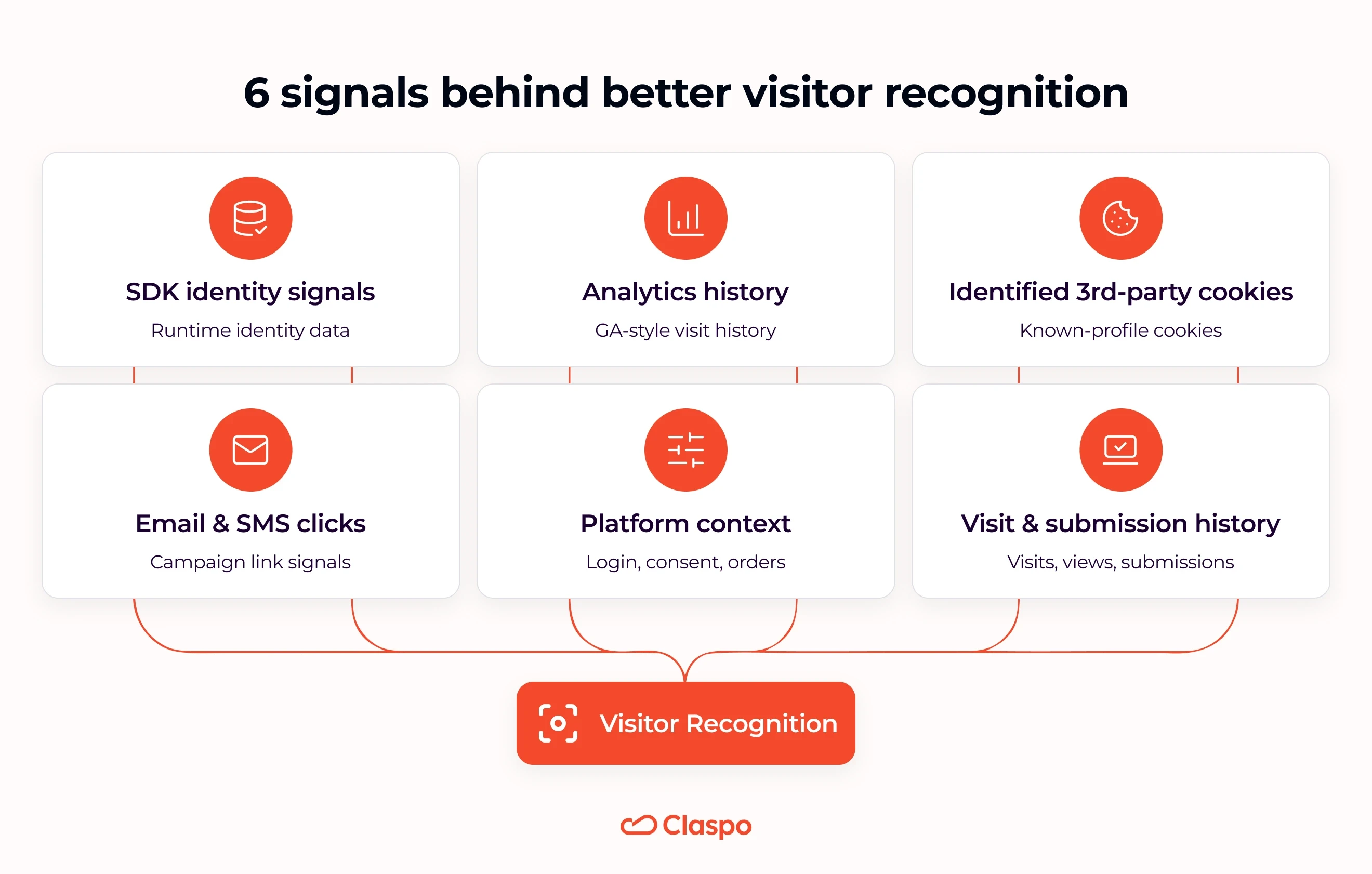
1. Own visit and submission history
This is the pop-up tool’s own memory. Has this browser visited before? Has this visitor seen the campaign? Have they already submitted this form?
It helps with frequency control, basic new vs returning visitor logic, and post-submission suppression. But it only reflects what happened inside the pop-up system. It cannot prove whether the person is truly unknown to the brand.
2. Platform context
Shopify, WooCommerce, WordPress, and similar platforms can give the pop-up signals the browser cannot: login status, customer email, marketing consent, order history, or customer status.
That is much stronger than “new vs returning.” A previous purchaser or logged-in customer should not be pushed into the same acquisition flow as someone the brand has never seen before.
3. Email and SMS click parameters
Campaign links can carry useful recognition clues. If someone arrives from an email, SMS, or push campaign the URL may include identifiers or channel parameters that show the visit came from an existing relationship channel.
The signal may not tell the whole story, but it can help the pop-up avoid treating that session as cold traffic.
4. Identified third-party cookies
Some ESPs, CDPs, and marketing platforms set cookies after a real identification event: an email click, login, form submission, or another known interaction.
When that cookie is available, the pop-up gets a useful hint that this browser has already been connected to a known profile elsewhere. It is not enough to build the whole strategy on. But it is too useful to ignore.
5. Analytics history
Analytics history can help fill gaps in basic visitor targeting. For example, GA-style cookies may show that a browser has visited before, even if the pop-up tool itself has no visit history yet.
This does not turn an anonymous visitor into a known subscriber. But it can reduce cases where a browser is labeled “new” only because the pop-up tool has not seen it before.
6. SDK identity signals
Some platforms expose identity through JavaScript objects or SDK methods.
When the vendor SDK is installed, supported, loaded, and able to identify the visitor, the pop-up can use that signal to improve targeting decisions.
No single signal can solve visitor recognition on its own. But together, these signals can help the pop-up make a smarter call:
Is this visitor probably new?
Already subscribed?
Known but not yet a customer?
Already purchased?
Still eligible for this offer?
That is the value of relationship-based ecommerce popup targeting. The pop-up does not need to know everything about every visitor. It needs enough context to avoid the obvious mistakes and choose a more relevant next step.
How Claspo brings visitor recognition into display rules
This is where customer lifecycle targeting becomes more than a concept. In Claspo, we have already started bringing visitor recognition signals into display rules.
The goal is simple: help marketers understand whether a visitor is really new, already subscribed, or already connected to the brand in some way — before the pop-up appears.
Claspo can now use several practical signals in rule-based targeting.
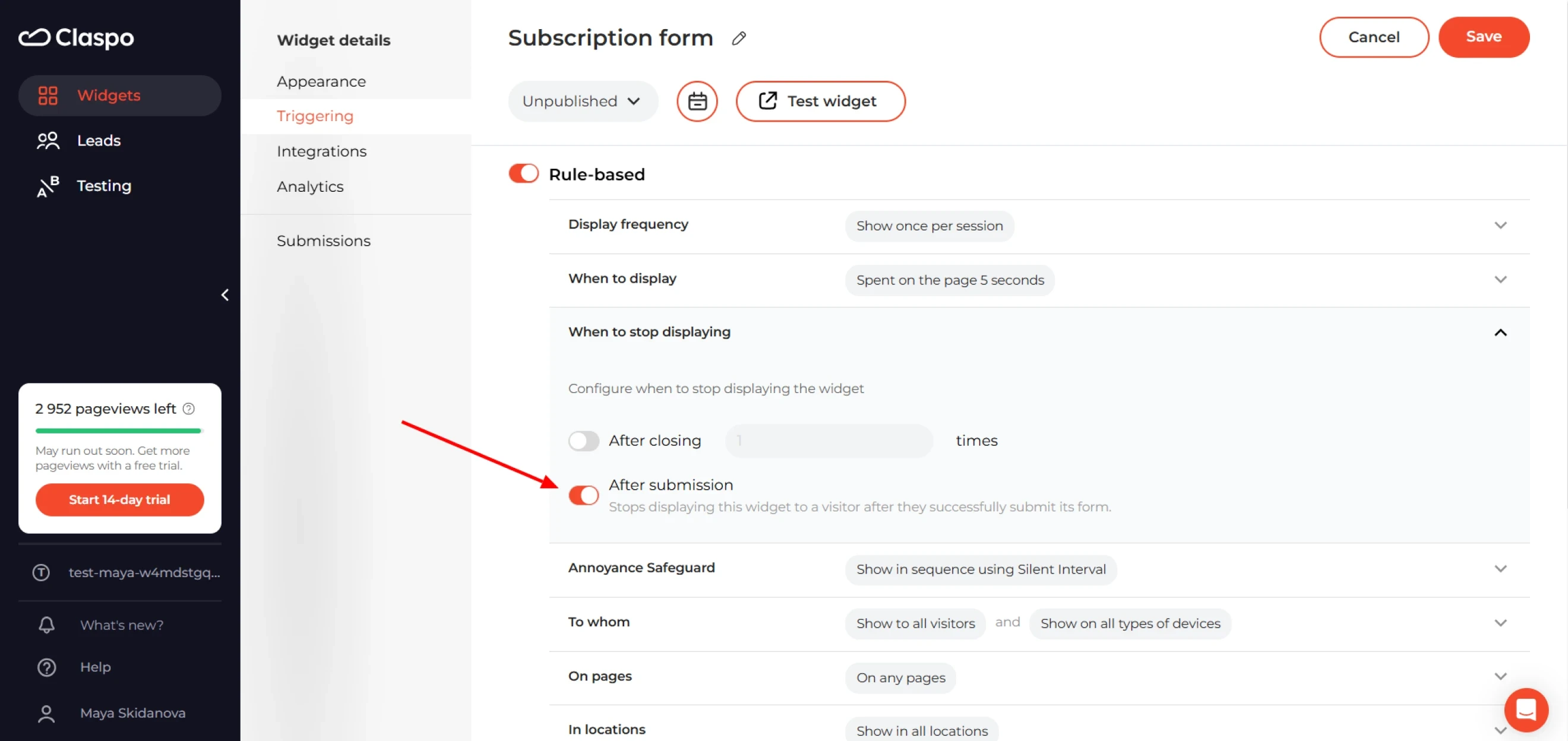
First, marketers can stop showing a pop-up after a successful form submission. Once a visitor submits that specific form, Claspo stops showing the same widget to them again. This helps avoid one of the most common onsite mistakes: asking someone to complete the same signup form twice.
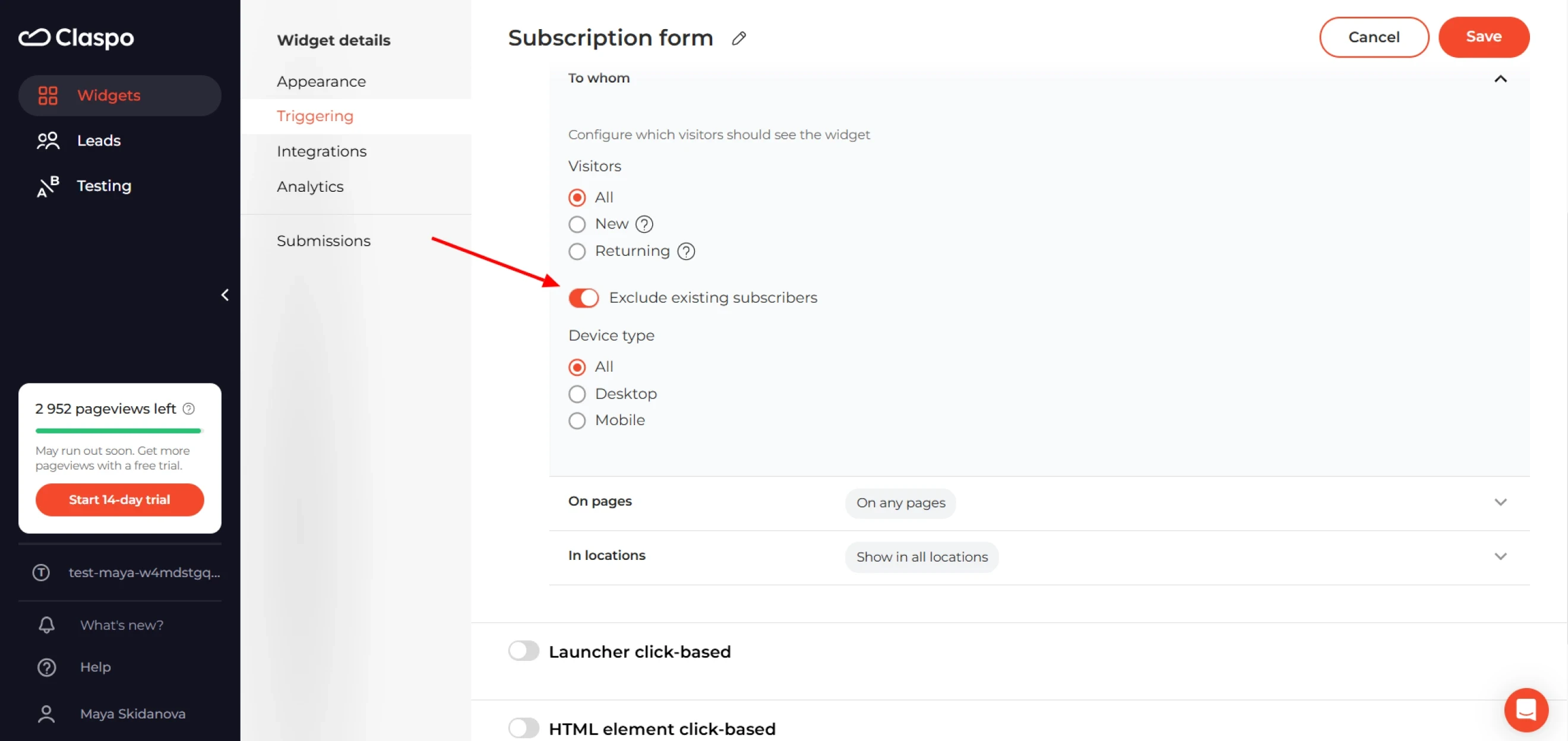
Second, Shopify merchants can exclude existing subscribers from a widget. In practice, this means Claspo can hide a pop-up from visitors who have already submitted another Claspo widget or whose Shopify context shows that they accept marketing. Also, a logged-in Shopify customer status becomes another signal that the visitor already has a relationship with the store.
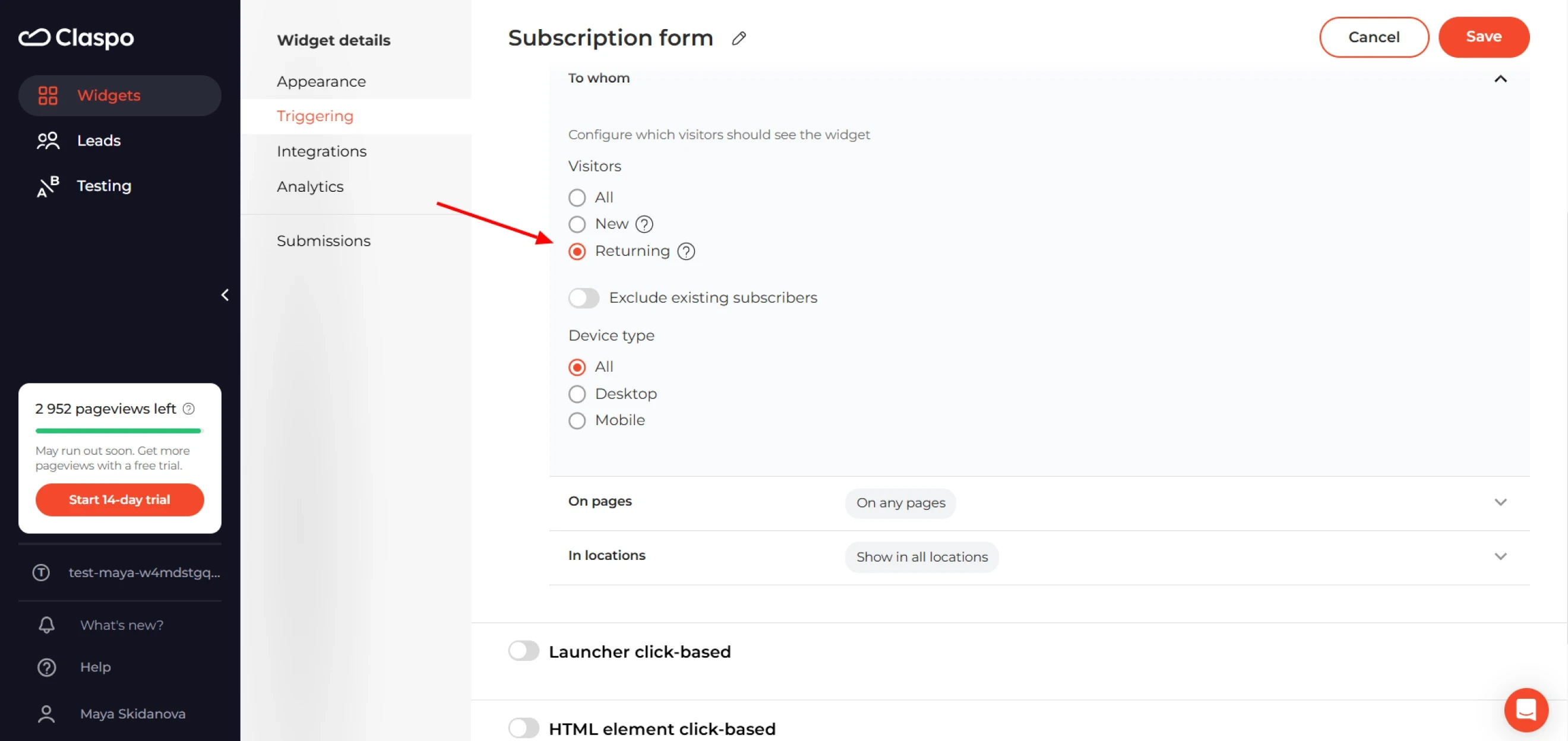
Third, campaign source persistence. When a shopper arrives with utm_medium=email, sms, newsletter, or push, Claspo can keep that source signal as they continue browsing. That matters for new vs returning targeting. Even if the browser looks new, the campaign source shows that the visitor came from an existing relationship channel. So if the pop-up appears on the next page, Claspo can still treat the visit as returning instead of cold traffic.
The future of popup targeting is relationship-aware
For years, popup targeting was mostly about the session. But ecommerce needs one more layer: where this visitor stands in the customer journey. That is when customer lifecycle targeting becomes truly practical: not as a static segment in a CRM, but as a real-time onsite decision about who should see which message next.
In Claspo, we are already moving in this direction by bringing visitor recognition signals into display rules. And this is only the beginning. We are expanding toward a recognition layer that combines all six signal groups — from form submission history and platform context to campaign sources, analytics history, third-party cookies, and SDK identity signals.
So the future of ecommerce popup targeting is not just about showing more pop-ups. It is about showing fewer wrong ones — and more messages that match the visitor’s actual relationship with the brand.
Claspo is built for that direction. And the best part: advanced targeting, personalization, and CRO-ready features are available across all our plans, including the free one. So even growing stores can start building smarter, relationship-aware onsite campaigns without waiting for an enterprise budget.