From 1.6% to 21% CR: How Lavender World Found the Right Popup Mechanic
A spin-the-wheel popup more than doubled signups. The team switched it off anyway — and tested six more mechanics to find what this audience actually needed.

21.3%
signup rate
7
formats compared

Website
Industry
Ecommerce, Home & Garden
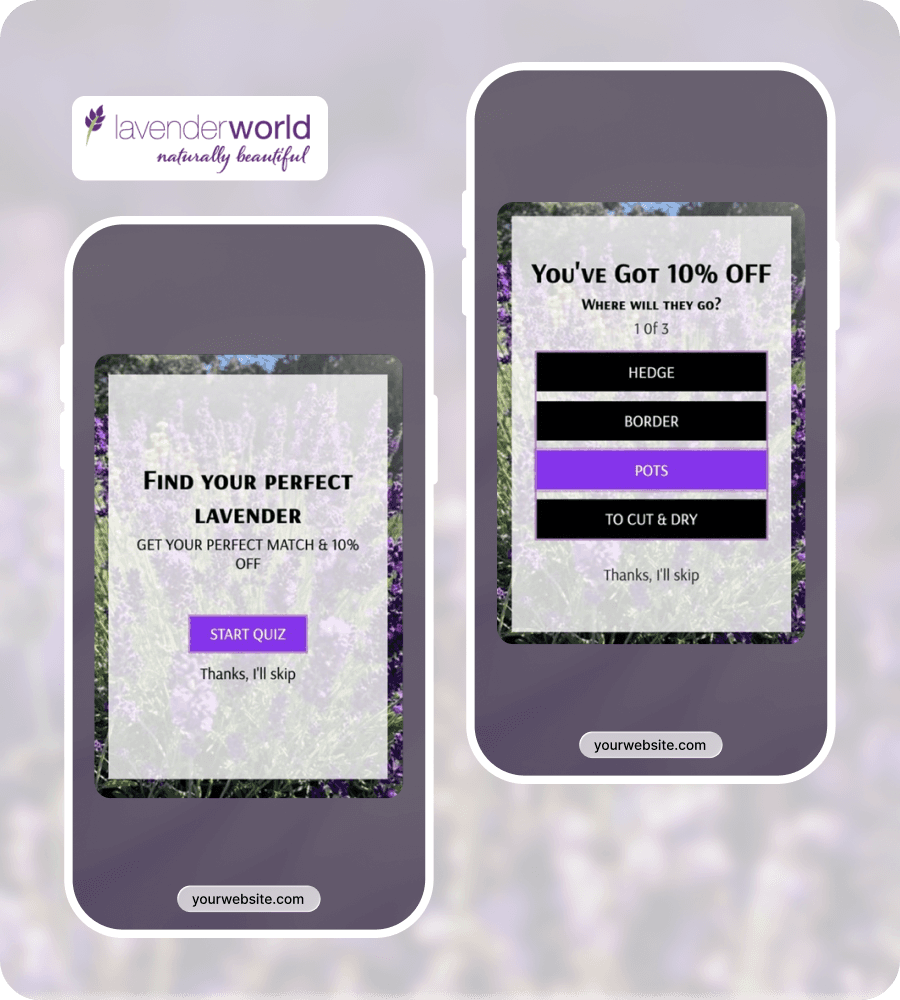
Lavender World is a Yorkshire nursery that delivers lavender plants to gardens across the UK. Its Shopify store has 26 products.
The challenge: beat a 1.64% signup rate
Before moving to Claspo, Lavender World used an ordinary discount popup built with Justuno. It offered 10% off and converted 1.64% of visitors. Lavender World’s agency, Positive Sparks, had a straightforward brief: improve the signup rate without changing the offer or the audience.
The obvious place to start was gamification. Spin-the-wheel popups add movement, curiosity and the chance to win, all of which can make a standard discount feel more interesting. The first result appeared to confirm that logic.
The apparent winner: spin-the-wheel
The spin-the-wheel popup converted 3.8% of visitors. Against the old 1.64% baseline, signups had more than doubled. That could easily have been the end of the test. The team could have kept the wheel running and spent the next month adjusting prize odds, headlines, button copy and colours.
Instead, we compared the result with other ecommerce campaigns using the same mechanic. The average ecommerce spin-the-wheel popup converted at 8.95%. Lavender World’s wheel was delivering roughly 0.4× that benchmark.
It had beaten a weak baseline, but it had not performed well for its own class. That distinction changed the direction of the project. Rather than polishing a format that was already underperforming, we moved on to other mechanics.
The solution: test the mechanic before optimising the execution
The team tested seven popup approaches in total, including the original baseline. The variants ran sequentially rather than as a simultaneous A/B test. They used the same store, audience and 10% offer, while the mechanic and flow changed from one version to the next. Here is how they performed:
Popup approach | Signup rate |
Baseline discount popup | 1.64% |
Mystery gift | 2.2% |
Micro commitment (Yes/No) | 3.4% |
Spin-the-wheel | 3.8% |
Quiz with an opening microcommitment | 4.4% |
Single-question choice popup | 13.2% |
Quiz opening with a choice | 21.3% |
The results did not show a steady climb from simpler to more interactive formats. Mystery gift and spin-the-wheel both improved on the baseline, but neither came close to the strongest choice-based versions.
The first breakthrough: one question with no wrong answer
The choice popup offered the same 10% discount and asked visitors: Where will they go? The answers covered the main ways customers use lavender:
Garden bed or border
Hedge
Pots
Cutting patch
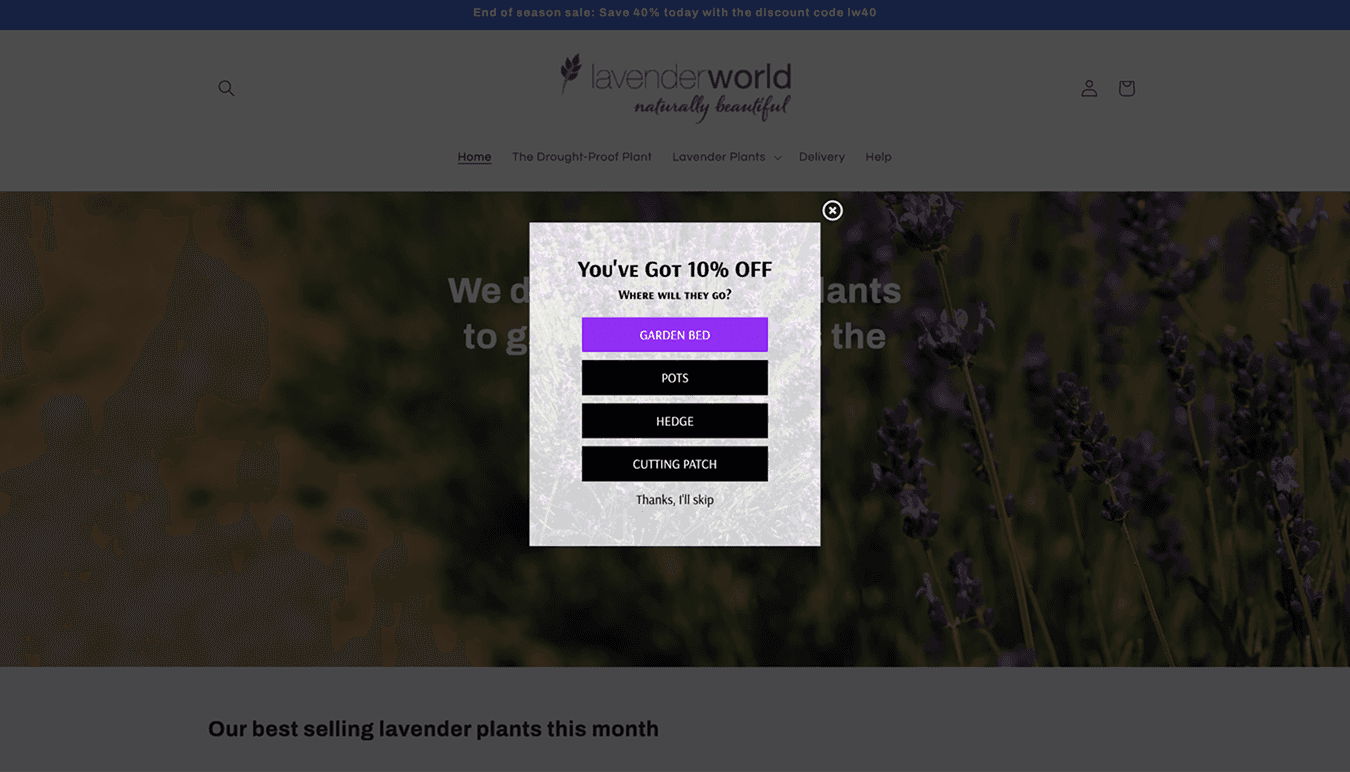
There was no wrong answer and no option that ended the experience. Each button moved the visitor to the next step while giving Lavender World useful information about what they wanted to plant.
This version reached a 13.2% signup rate, approximately 2.8× the benchmark for choice-based popups.
The same quiz, with one screen changed
Two versions of the lavender quiz used the same questions and the same 10% offer. The main difference was what visitors saw first.
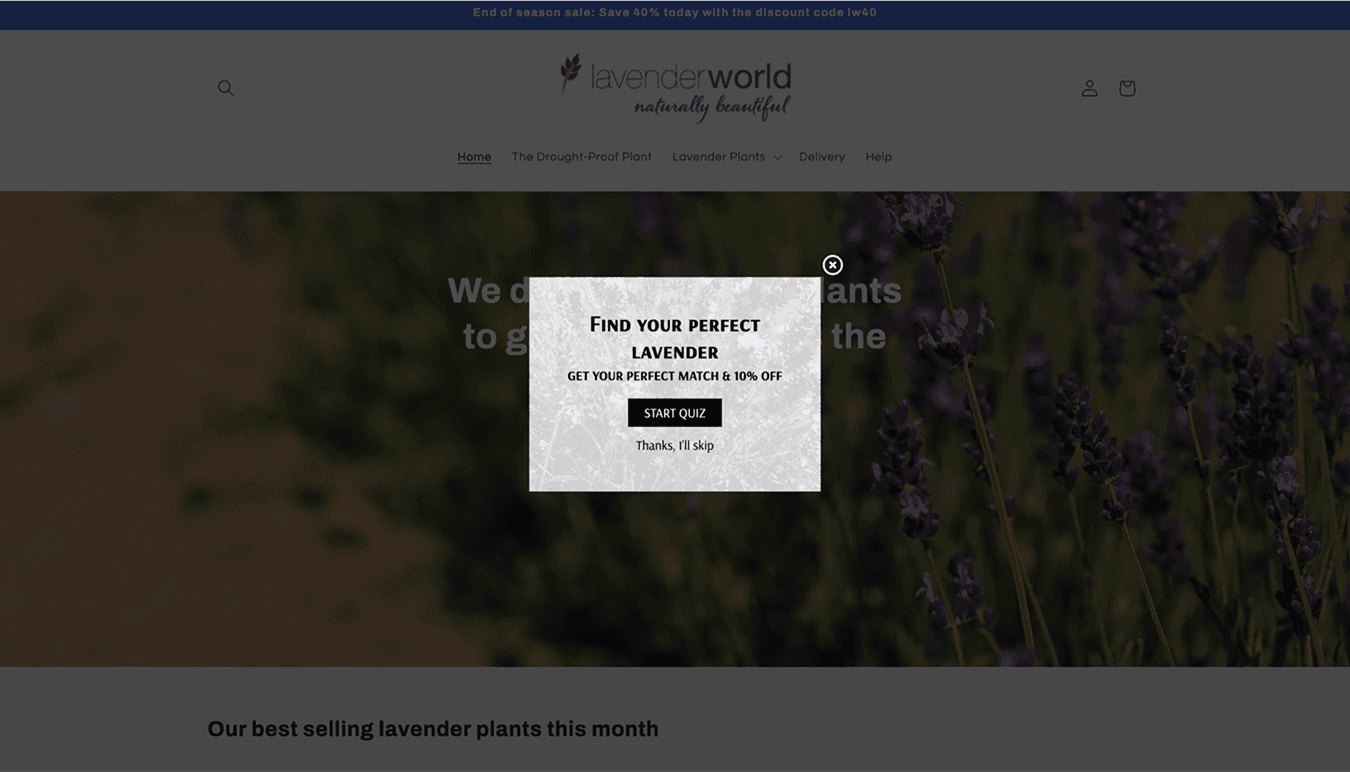
Version 1: ask whether they want to begin
In the first version visitors could select “Start Quiz” or use the “Thanks, I’ll skip” link directly below it. Before answering anything about their garden, they had to decide whether the quiz was worth their time. The first interaction was effectively a choice between continuing and leaving. This version converted at 4.4%.
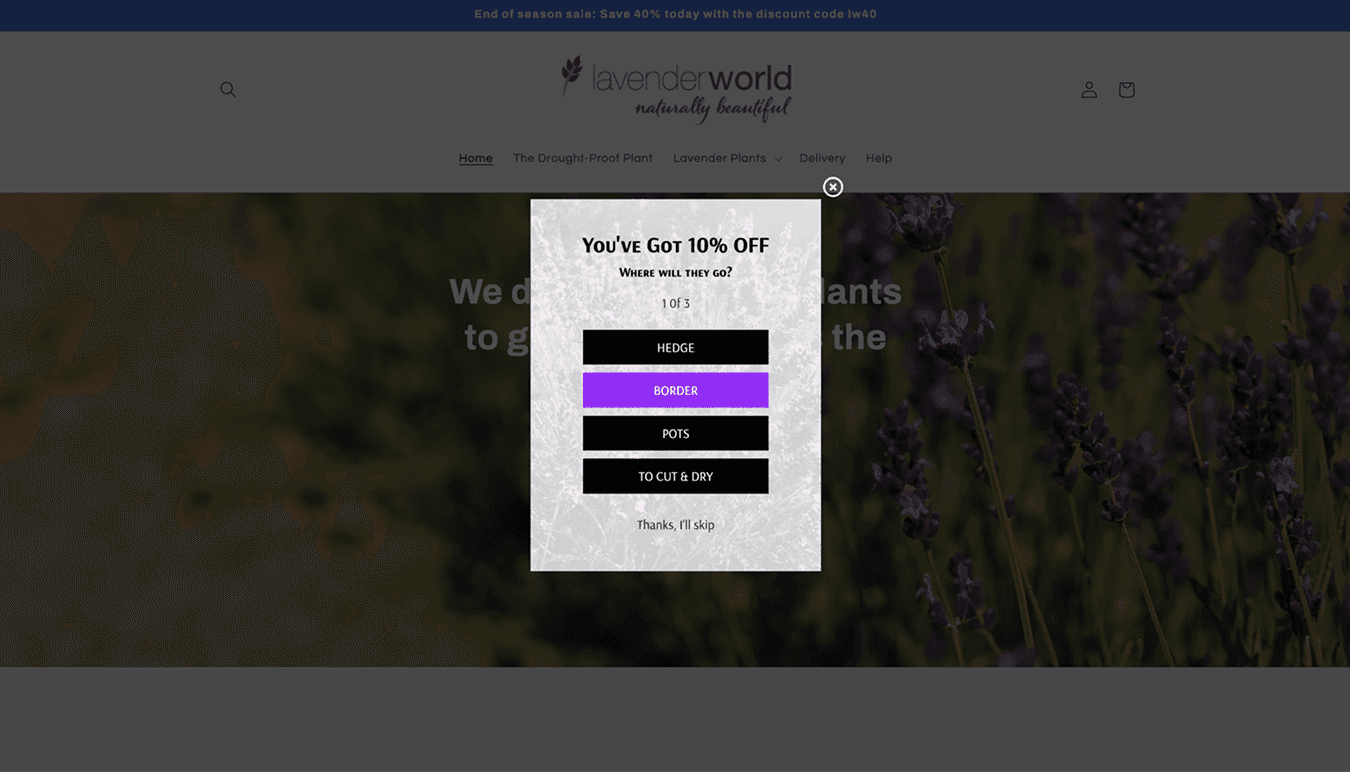
Version 2: begin with a real question
The second version removed the introductory gate and opened directly with the planting question. Visitors immediately saw four relevant options and a 1 of 3 step counter. The skip link was still available, but it no longer competed with a single “Start Quiz” button as the main decision on the screen. This version reached a 21.3% signup rate — approximately 4.8× the version with the opening gate.
Why choice worked better than a game
A prize wheel adds excitement, but excitement was not the main thing missing from this buying journey. A choice-led quiz addressed the uncertainty that could hold someone back.
“Brits are less into gamification than Americans in general. And the audience here is homeowners 40, 50, 60 — established in life, looking to make life better and protect what they have”. — Phil Byrne, founder of Positive Sparks
They usually arrive with a project already in mind. The unanswered question is not whether planting lavender sounds appealing. It is which variety, size and quantity will work in their garden.
Every answer created useful preference data
The choice question did more than move visitors through the popup. It showed Lavender World what people planned to do with the plants. The final quiz recorded 159 answers:
46% chose a garden bed or border;
29% selected a hedge;
23% planned to use pots;
2.5% wanted a cutting patch.
Of those 159 answers, 68 were followed by an email signup. For subscribers, the selected use case could be passed to Brevo as a contact attribute before the welcome email was sent. Lavender World therefore knew more than the subscriber’s email address from the start. Each answer could lead to a different follow-up.
What marketers can take from this test
Compare a popup with its own class
Beating the previous popup tells you that performance improved. It does not tell you whether the new mechanic is reaching its potential. Compare wheels with wheels, quizzes with quizzes and choice-based forms with their own benchmark. A weak baseline can make an average idea look exceptional.
Test the format before polishing the copy
Headlines, colours and CTA wording matter, but they cannot fully compensate for a mechanic that does not fit the audience. Before spending weeks optimising one popup, test whether visitors respond better to a game, a mystery offer, a simple choice or a guided quiz.
Start a quiz with an actual question
A separate “Start Quiz” screen adds a decision before the visitor receives any value. If the first question is easy and relevant, let people answer it immediately. The best opening questions do not have a wrong answer. Every option should move the visitor further into the flow.
The largest improvement did not come from a bigger discount, a more exciting prize or cleverer copy. It came from asking the right question first.
Install Claspo and enjoy the benefits of using conversional pop-ups on your website!
Start stimulating sales and engagement with creative widgets now
No credit card and no time limit!

Personal Demo
Get acquainted with Claspo during a one-on-one video call with our expert