11 Best OptiMonk Alternatives for Ecommerce in 2026

Summarize
OptiMonk is an ecommerce conversion software that brings together pop-ups and website personalization, segmentation, testing, gamification, and ecommerce-specific campaigns.
OptiMonk Free Plan is free for 10,000 monthly pageviews on 1 domain (with OptiMonk branding) and all features with no limitation on campaigns. Paid plans begin at $19 per month for 20,000 pageviews billed annually.
In general, this is a great tool for teams looking for a broad self-serve CRO toolkit. OptiMonk alternatives make more sense when you need a specific feature set for your campaigns.
TL;DR
Tool | Best for | Free plan/trial | Starts at |
Claspo | Agentic AI optimization and deeper gamification | Free plan (3K pageviews) | $29/mo annually (50K pageviews) |
Poptin | Popups with built-in email marketing | Free plan (1K visitors) | $20/mo annually (10K visitors) |
Popupsmart | AI-assisted targeting and popup creation | Free plan (5K pageviews) | $32.50/mo annually (50K pageviews) |
Sleeknote | Ecommerce teams that value support and gamification | 14-day trial | €49/mo annually (25K visitors) |
Justuno | Audience intelligence and complex ecommerce workflows | 14-day trial | $53/mo annually (10K visitors) |
Wisepops | Ecommerce automation and advanced experimentation | 14-day trial | €599/mo |
Privy | Shopify popups with email and SMS | 15-day trial | $24/mo (10K monthly page views) |
Klaviyo Forms | Teams already using Klaviyo | Free (<250 active profiles) | Scales by active profiles and feature set |
ConvertFlow | Funnels, quizzes, and segmentation | Free plan | $25/mo (10K funnel views) |
OptinMonster | WordPress and publishers | No trial or free plan | $7/mo annually (2,500 campaign impressions) |
Alia | Shopify email/SMS capture and continuous optimization | 14-day trial | $75/mo annually (20K visitors) |
Pricing as of September 2026.
When should you consider an OptiMonk alternative?
OptiMonk already offers solutions for a diverse set of onsite conversion scenarios, which means that picking a competitor will depend mainly on a more appropriate fit for your technology stack, budget, or workflow.
Users look for OptiMonk alternatives if they:
want a different pricing model or lower entry cost;
need email and SMS built into the same platform;
want deeper funnel, quiz, or landing-page functionality;
prefer a tool built specifically around Shopify or WordPress;
need more specialized gamification;
want managed CRO or hands-on campaign support instead of a fully self-serve workflow.
11 OptiMonk alternatives to consider
There’s no single best replacement for every business. We compare the tools below by their key differences from OptiMonk, pricing, ecommerce fit, and the use cases they serve best.
Claspo — best for self-serve onsite conversion with AI optimization
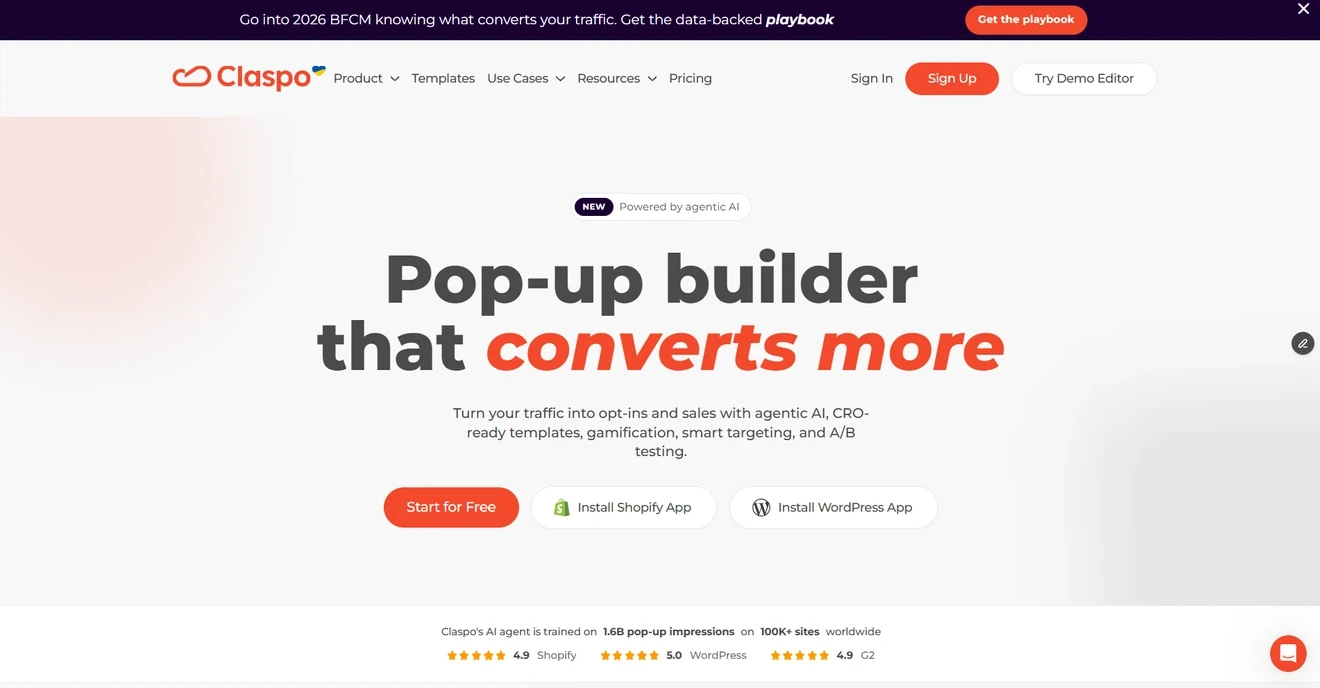
We’ll open the list of best OptiMonk alternatives with Claspo. It is a popup and onsite conversion platform with agentic AI. It’s a good fit if you want to build, target, test, and optimize campaigns without moving into a heavier CRO suite. It lets you build popups, embedded forms, multi-step campaigns, quizzes, surveys, and gamified experiences such as Spin-the-Wheel, Slot Machine, and even unique seasonal games.
Both OptiMonk and Claspo have AI, but the main difference lies in its direction. Claspo is becoming an agentic popup builder: its AI agent, trained on 1.6B+ sessions, analyzes traffic, finds conversion gaps, builds and launches campaigns, and continuously optimizes them. By comparison, OptiMonk’s advanced AI optimization tools are offered as a separate premium add-on.
Claspo's gamified popups make a big difference as well. Claspo has 8 built-in game components, compared with 3 in OptiMonk. You can also build unique, custom games with the Claspo SDK.
Claspo’s SDK goes beyond games. It lets users create custom games and components with AI. You can describe the idea in plain language, refine it in chat, and add the finished component to the editor for reuse in campaigns.

Claspo has a free plan with all features, one website, and up to 3,000 monthly pageviews. Pricing starts at $29/month for 50,000 pageviews. OptiMonk’s free plan is more generous (10,000 pageviews vs. Claspo’s 3,000). On paid plans, however, Claspo offers more traffic for the price: 100,000 monthly pageviews cost $52/month with Claspo versus $69/month with OptiMonk when billed annually.
Poptin — best for popups with built-in email marketing
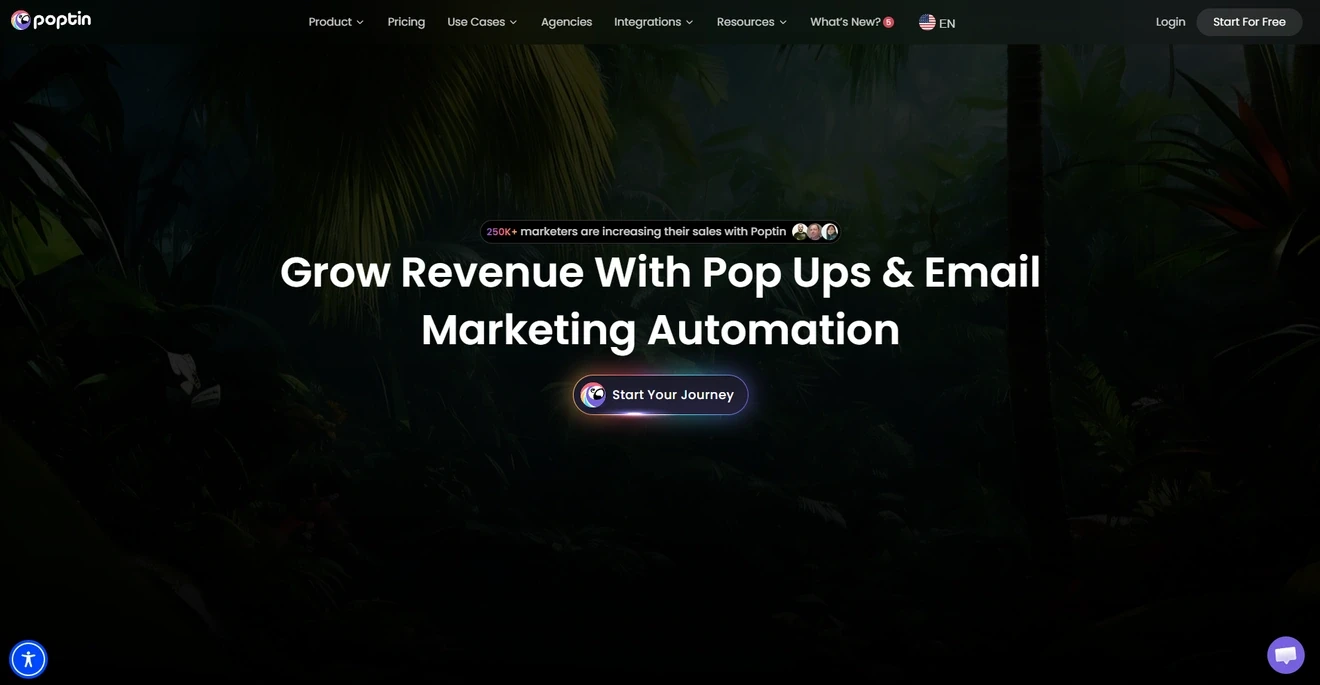
Our next OptiMonk alternative is Poptin. The tool combines popups and forms with email campaigns and automation. The combo gives you the ability to get a prospect and continue to nurture through the same platform. It also integrates data from Shopify and Wix to support product emails, recommendations, and cart-recovery campaigns.

A key difference from OptiMonk is the pricing model. Since Poptin measures unique monthly visitors, if one individual visits multiple pages, they will still only be counted once. Its free popup plan covers 1,000 visitors on one domain, while paid plans start at $20/month billed annually for 10,000 visitors. However, you need to pay an additional fee if you want to send emails via Poptin.
Trade-off: Poptin’s free allowance is much smaller than OptiMonk’s, and its main advantage is the broader popup + email workflow rather than deeper onsite personalization.
Popupsmart — best for fast AI-assisted popup creation
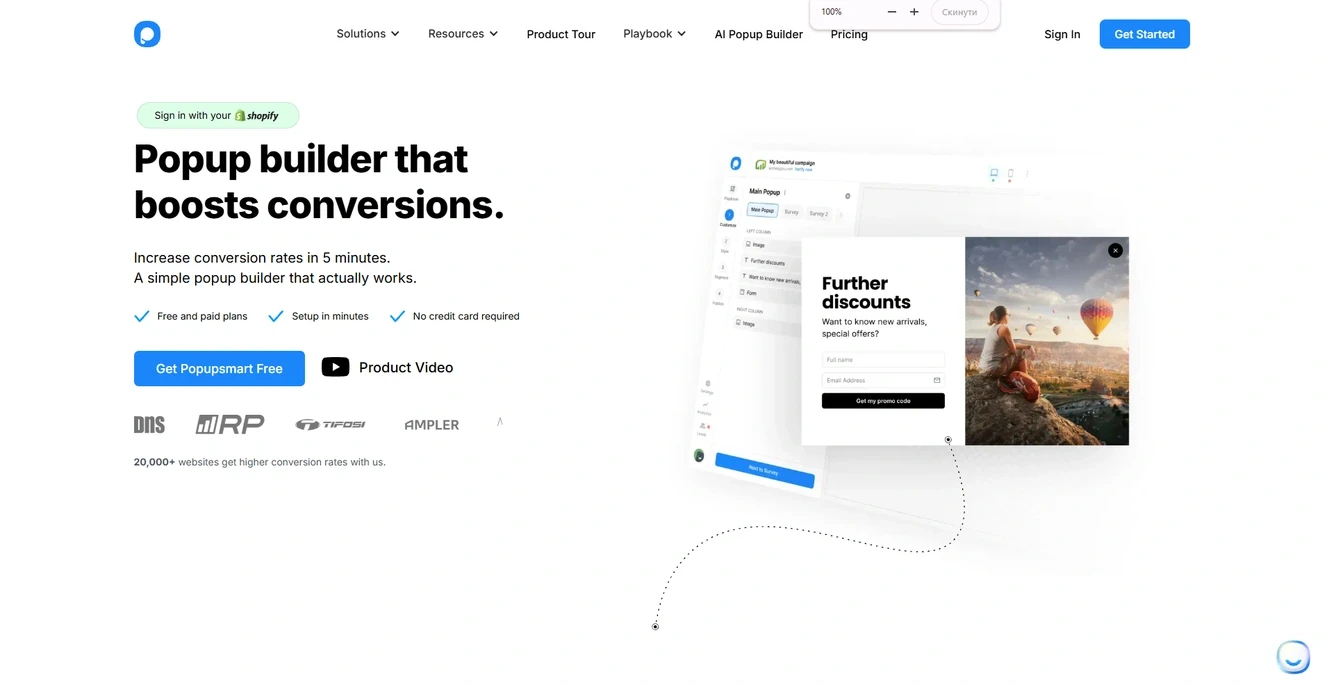
Popupsmart combines a prompt-based AI popup builder with Smart Mode, which analyzes visitor behavior and automatically chooses who should see a campaign, when to show it, and which trigger to use. Both tools can generate campaigns with AI, but Popupsmart also applies AI to targeting.
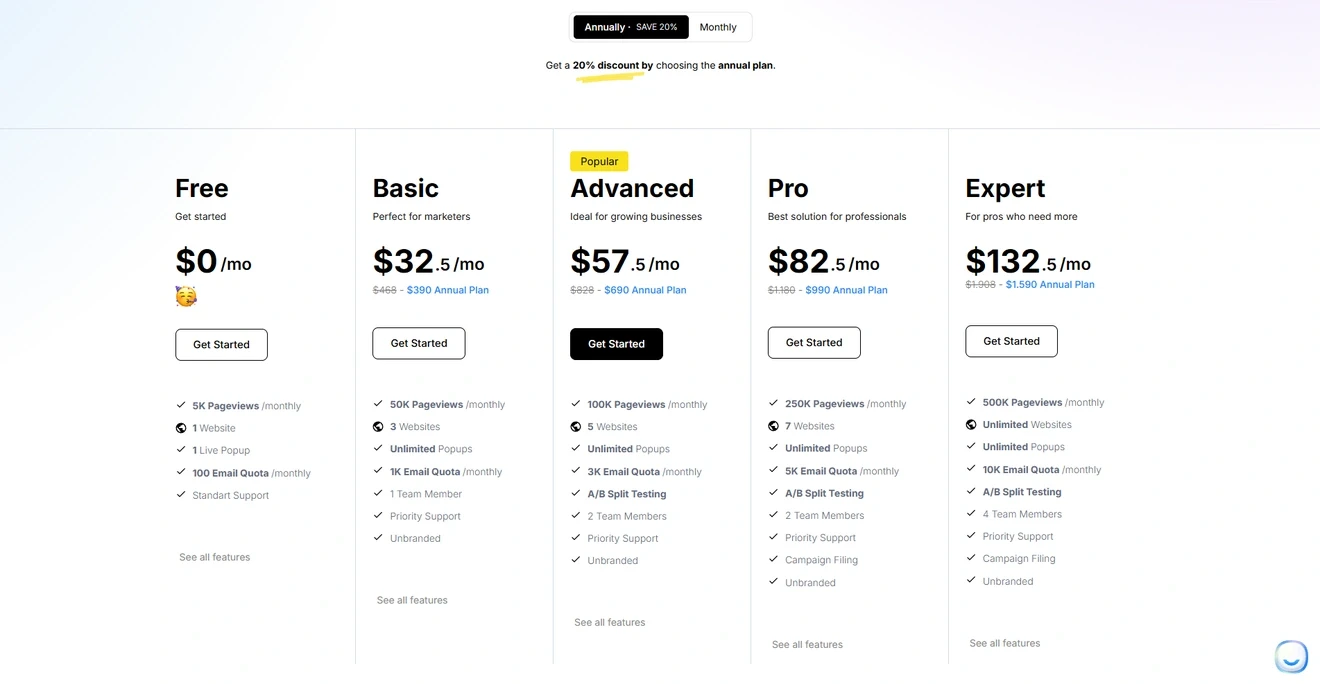
As with OptiMonk, pricing is based on pageviews. Free plan provides 5,000 pageviews, one site, and one popup. Paid packages start with $32.50 per month (yearly payment) with 50,000 pageviews. Unlike OptiMonk, Popupsmart offers a limited set of features across its packages; for instance, A/B Testing is included only starting from the Advanced plan ($57.50 per month).
Trade-off: Popupsmart can offer quick popup creation using the prompt-based AI builder, while OptiMonk gives access to all features in any plan and offers unlimited campaigns.
Sleeknote — best for ecommerce teams that value support and broader gamification

Sleeknote is a website conversion tool which features popups, forms, product recommendations, and behavioral targeting. This tool comes with an array of gamified formats, including Spin to Win, Scratch to Win, Seasonal Calendars, Daily Offers, and Quizzes.
Another difference is account flexibility. Sleeknote plans include unlimited campaigns, domains, and users, which can be useful if you’re managing several stores or markets.
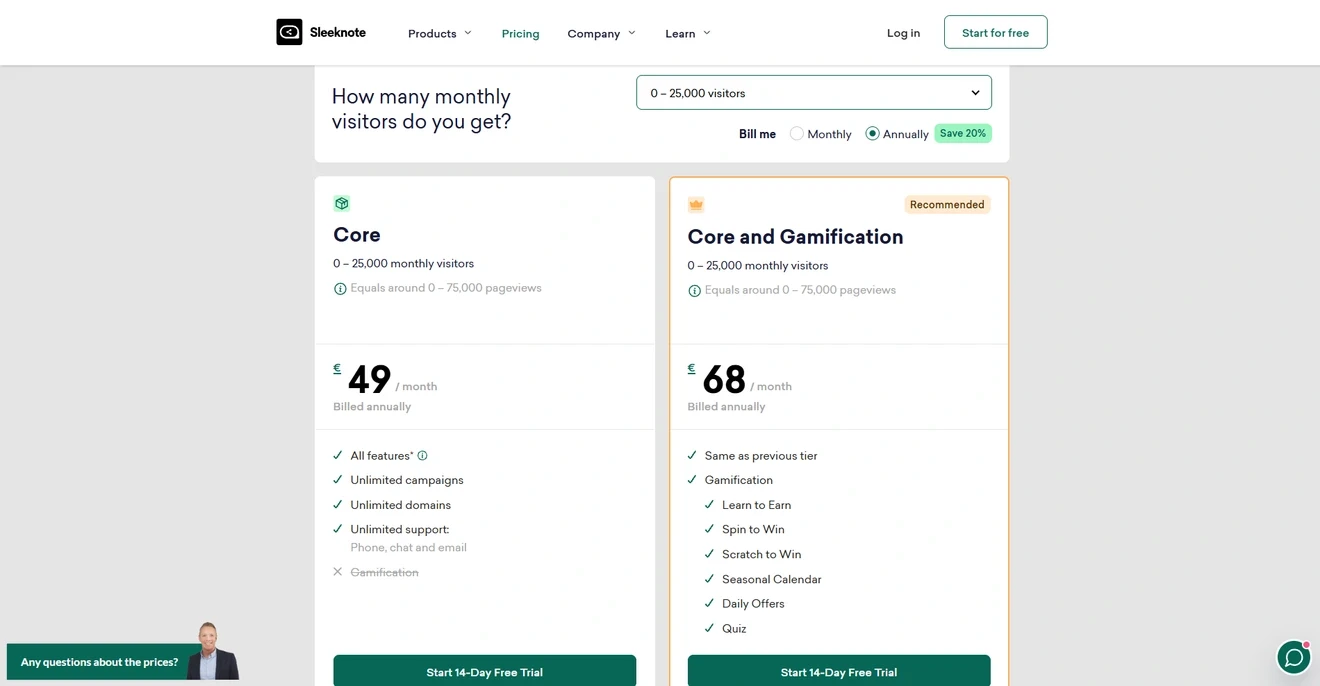
There’s no permanent free plan, only a 14-day trial. Pricing is based on unique visitors. Core starts at €49/month billed annually for up to 25,000 monthly visitors. Core + Gamification starts at €68/month for the same traffic.
Trade-off: Gamification is sold separately from the Core plan.
Justuno — best for audience intelligence and complex ecommerce workflows
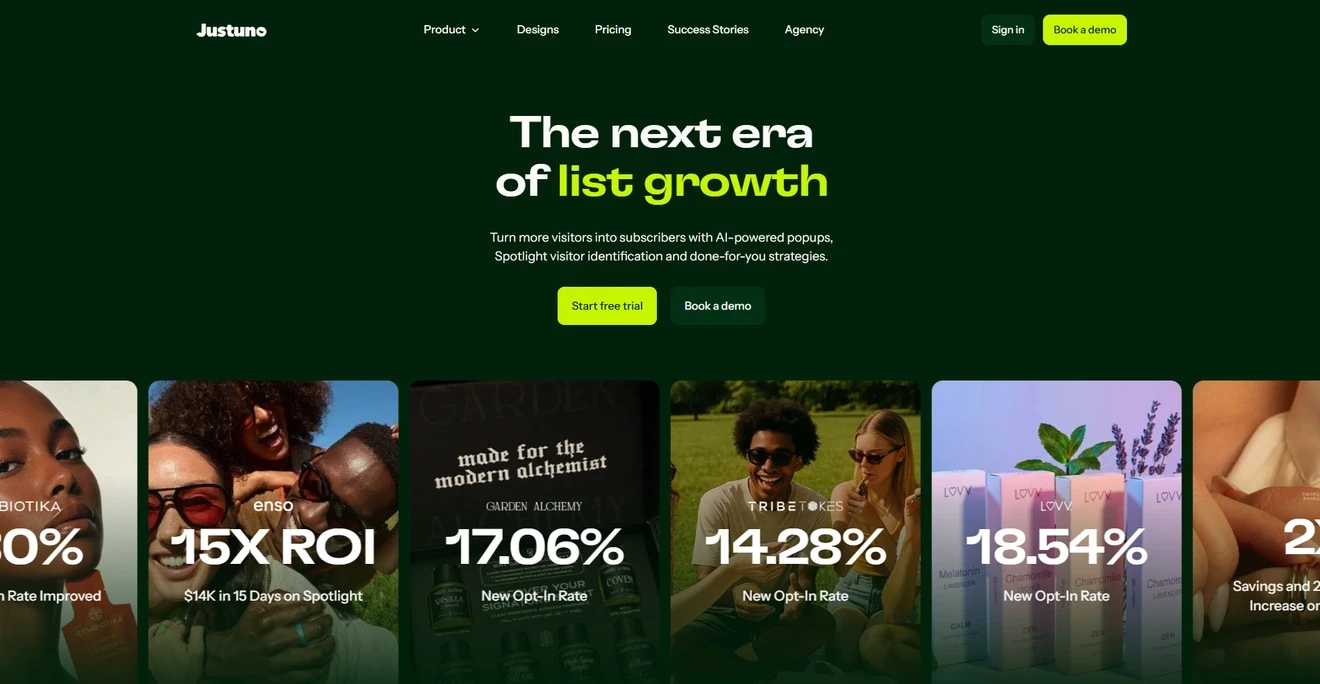
Justuno is an ecommerce conversion software that offers popups, personalization, product recommendations, landing pages, and visual workflows.
Justuno is equipped with Visitor ID to identify anonymous visitors, Audience Sync to transfer audiences to Google and Meta, and visual workflows to create triggers and multi-step popups.

Trade-off: Justuno Spotlight is a paid, traffic-based add-on for visitor identification. Adding it increases the Lite plan price by roughly 75–90%, depending on monthly visitors. For example, Spotlight can increase the Lite plan from $199 to $348/month. If that add-on cost is a concern, compare other tools like Justuno.
Wisepops — best for ecommerce teams that want more automation
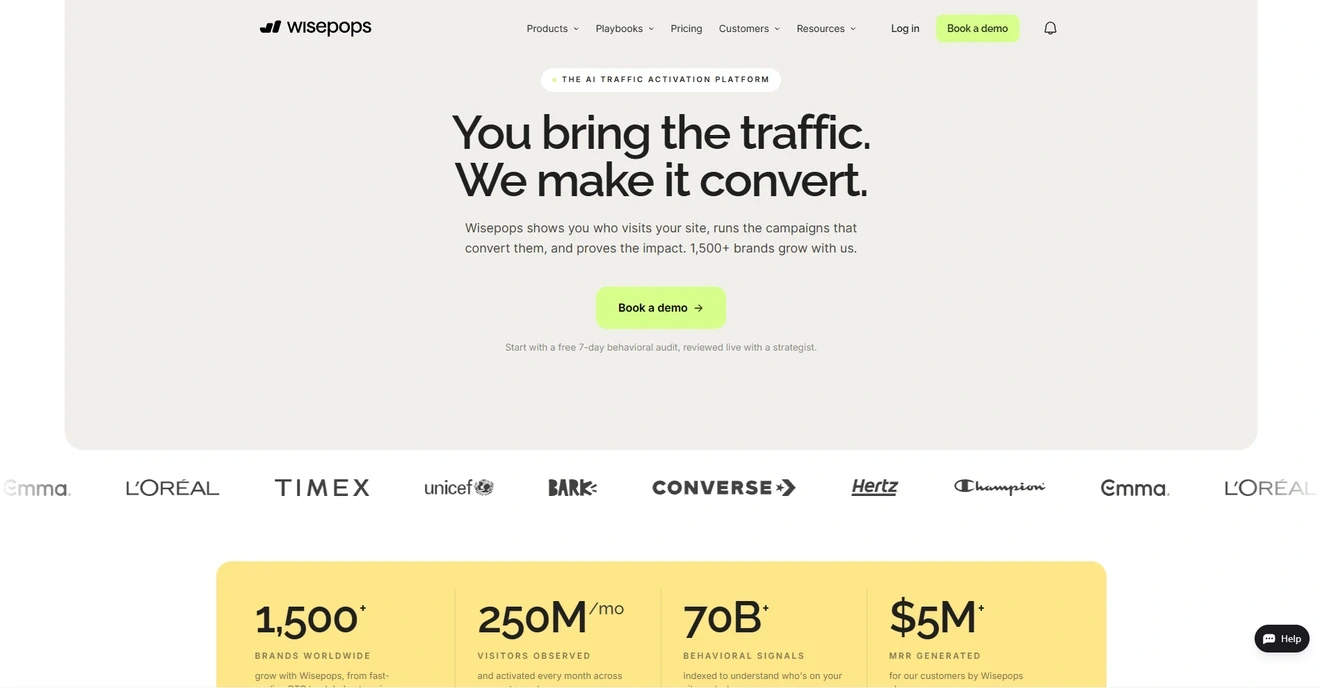
Wisepops combines popups and embeds with web push, an onsite feed, AI product recommendations, and testing tools.
Compared with OptiMonk, it does a few things differently. Its Wisebrain feature can predict when a Shopify visitor is likely to abandon their cart and trigger a campaign before they actually leave. Its testing tools can also automatically send all traffic to the winning version once the result is statistically clear.
Wisepops also gives you more ways to reach visitors beyond popups, with web push and its onsite feed.
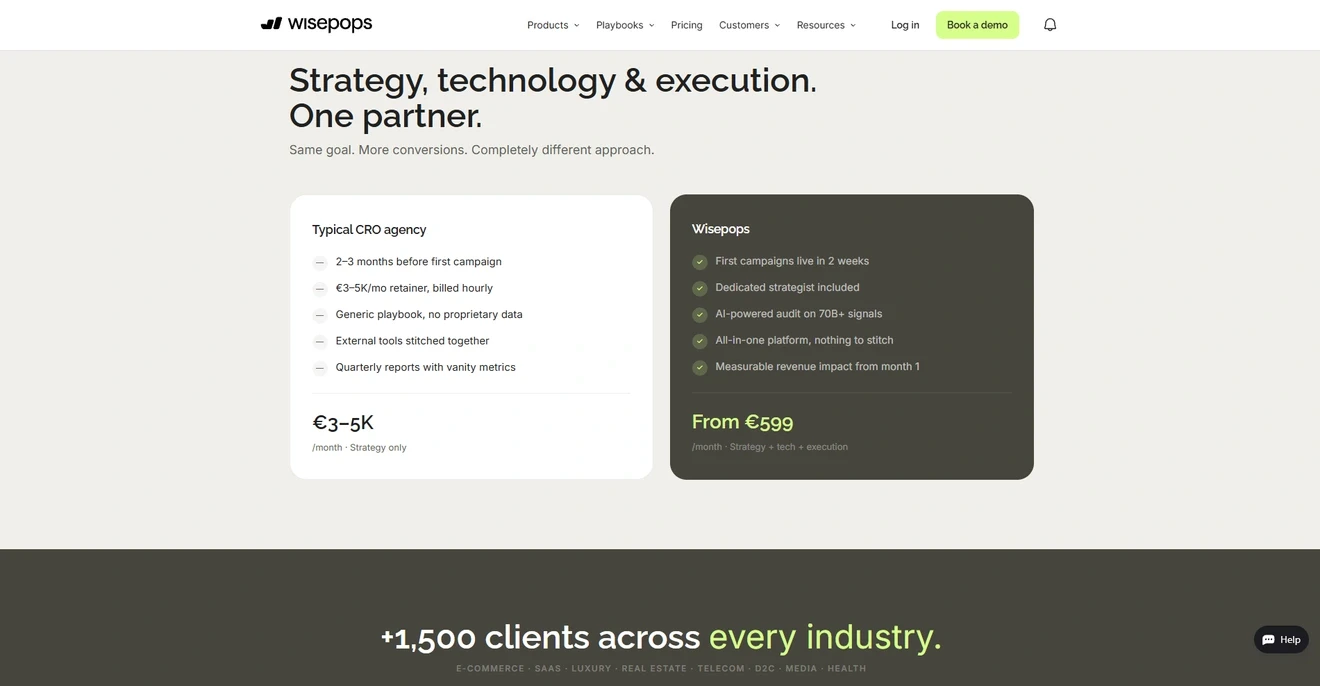
Trade-off: Wisepops has moved toward a higher-budget, demo-led model and no longer has the permanent free tier OptiMonk offers. Wisepops starts at €599/month, so it’s aimed at businesses with a much bigger budget than OptiMonk.
Privy — best for Shopify brands that want popups, email, and SMS together
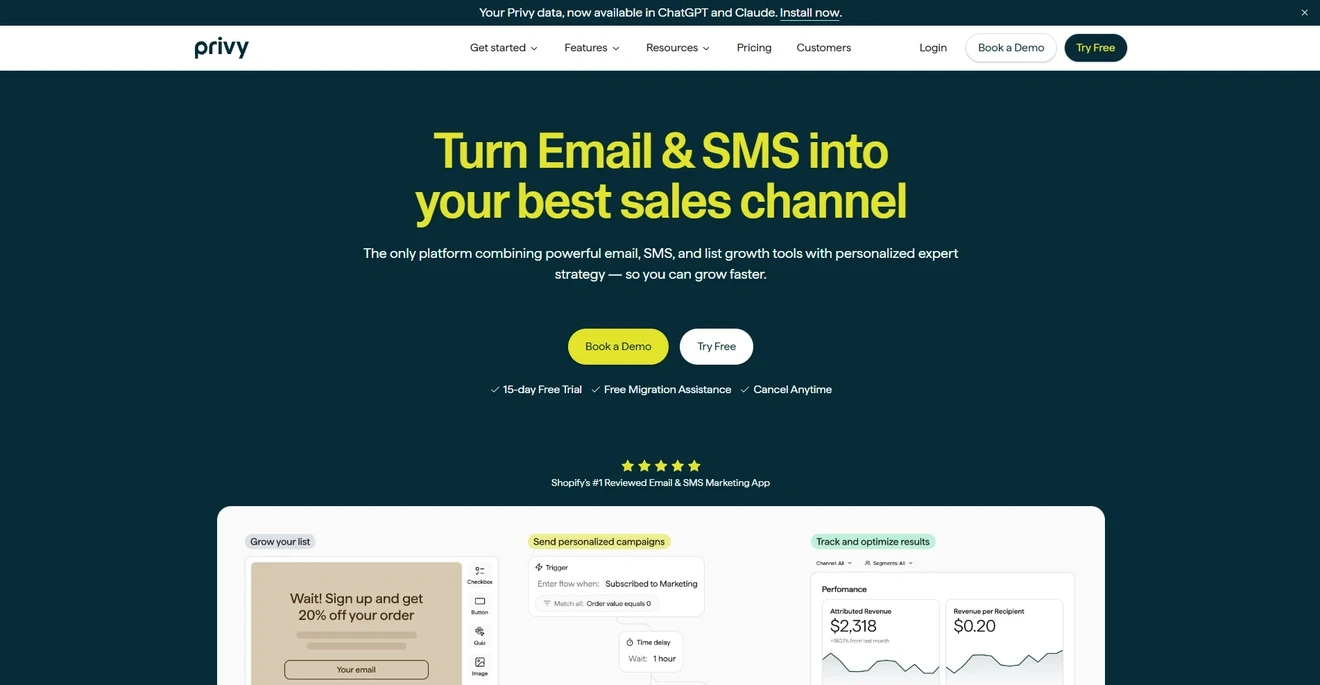
The Privy platform features popups along with email and SMS marketing. This approach allows you to collect a lead and then continue the communication via the same channel. Its Shopify integration also supports contact sync, coupon codes, cart and order data, and product-based targeting.
The main difference from OptiMonk is that Privy does not limit its functionality to on-site conversions only; it also includes email and SMS campaigns, automation, segmentation, and follow-ups.
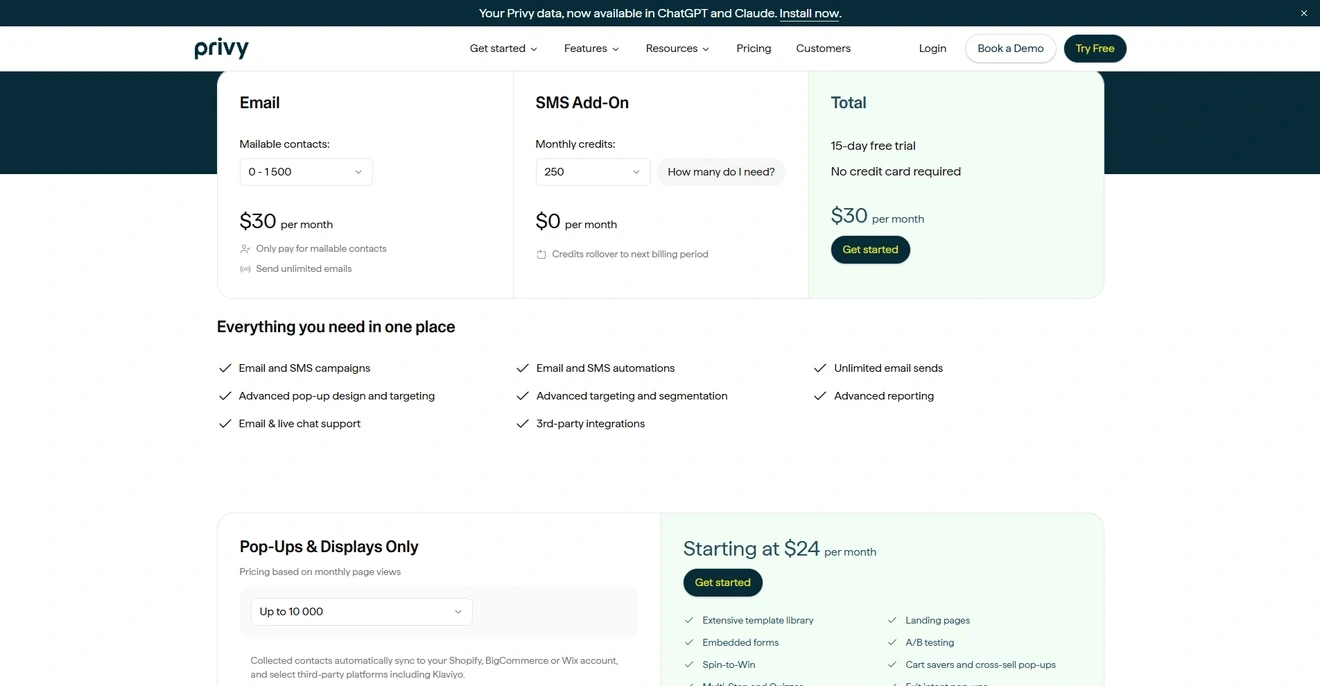
Pricing also works differently. Privy’s Displays-only plan starts at $24/month for 10,000 pageviews, while its email plan starts at $30/month and scales by mailable contacts. SMS is added through message credits.
Trade-off: if you only need onsite campaigns, paying for a broader email/SMS platform may not make sense.
Klaviyo Forms — best for teams already using Klaviyo for email and SMS
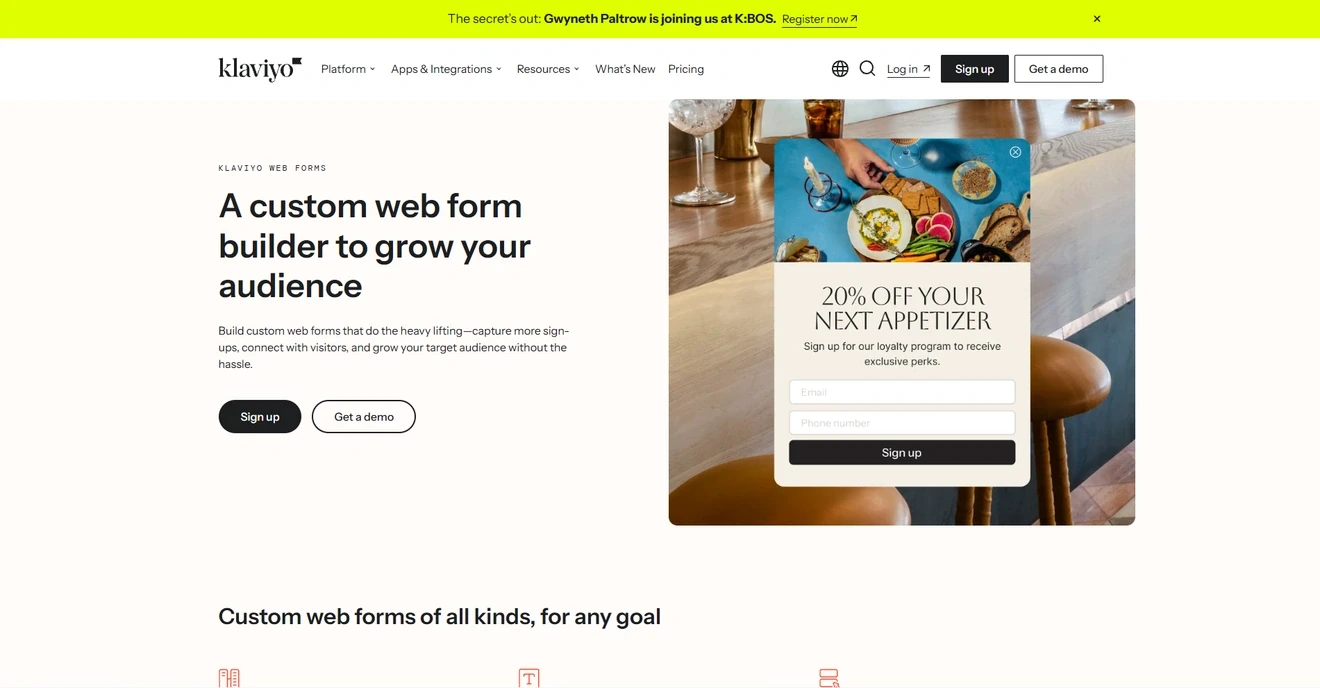
Klaviyo Forms lets you build popups, flyouts, full-page forms, and embedded forms inside the same platform you use for email, SMS, segmentation, and automated flows. Submitted form data goes straight into Klaviyo profiles and can immediately be used for follow-up campaigns and audience segments.
Klaviyo Forms is part of a broader lifecycle marketing platform, not a standalone onsite conversion tool. Its forms support targeting by visitor, URL, UTM parameters, location, cart contents, and other conditions, but the real advantage is what happens after signup.
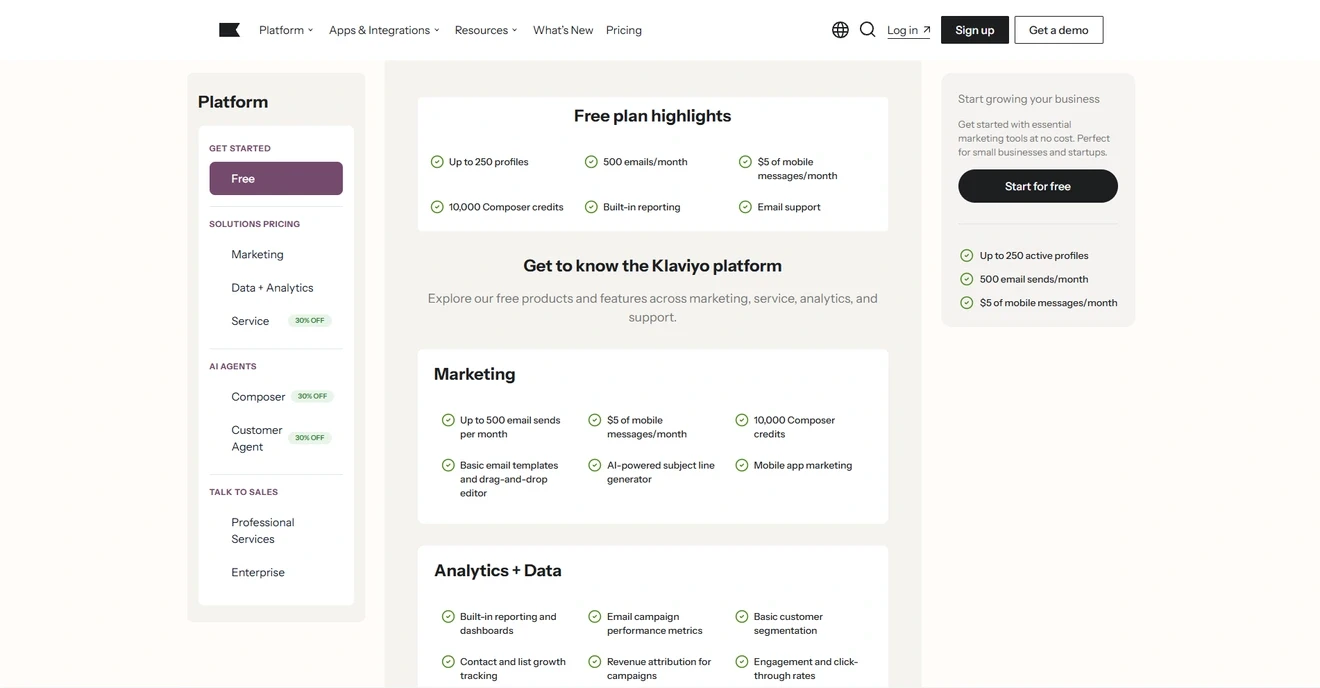
Klaviyo has a free plan for up to 250 active profiles and 500 emails per month. Pricing scales primarily with active profiles and email volume rather than with website traffic.
Trade-off: if you only need popups, Klaviyo’s contact-based pricing can become less attractive as your list grows, since active profiles count toward the plan even if forms are your main use case.
ConvertFlow — best for funnels, quizzes, and segmentation
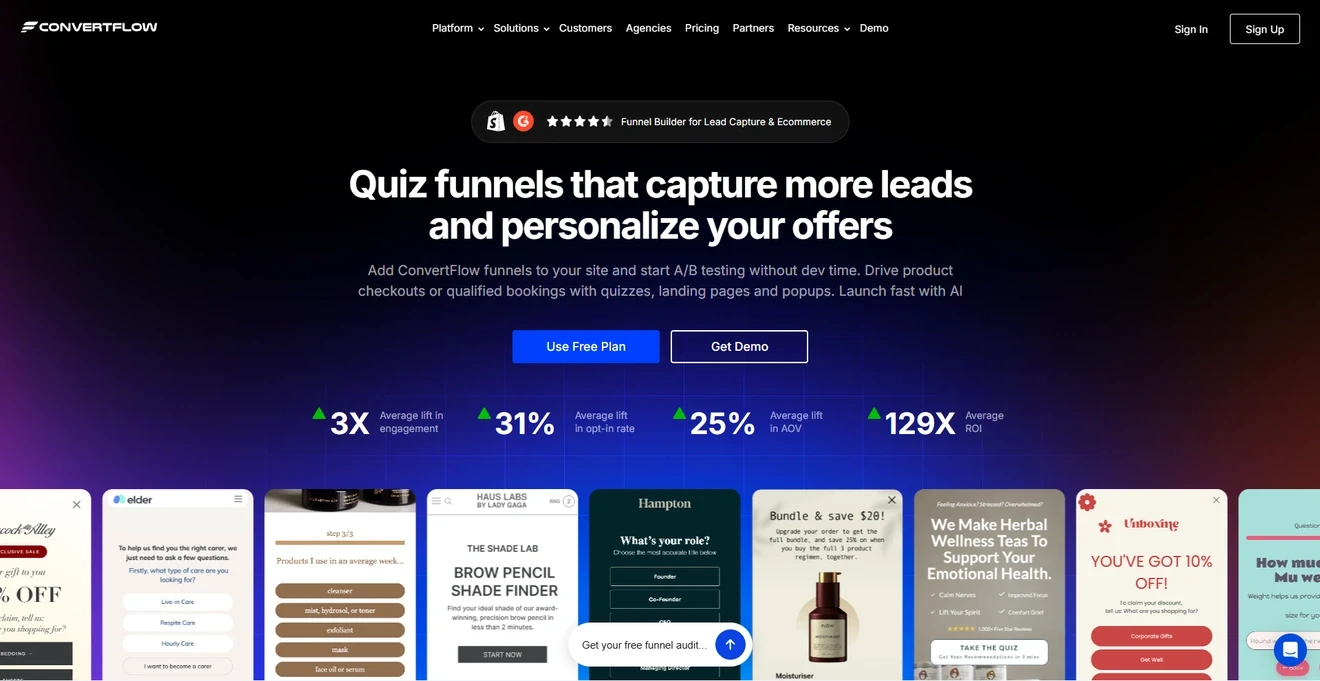
ConvertFlow goes beyond popups into full conversion funnels. You can build landing pages, quizzes, embedded forms, popups, and multi-step flows, then connect them with conditional logic.
The clearest difference from OptiMonk is its funnel depth. Quiz answers can send visitors to different funnel steps, show different offers, trigger another popup, or feed data into CRM and email tools. ConvertFlow also stores quiz answers in contact profiles, which makes it useful for segmenting visitors and personalizing later campaigns.
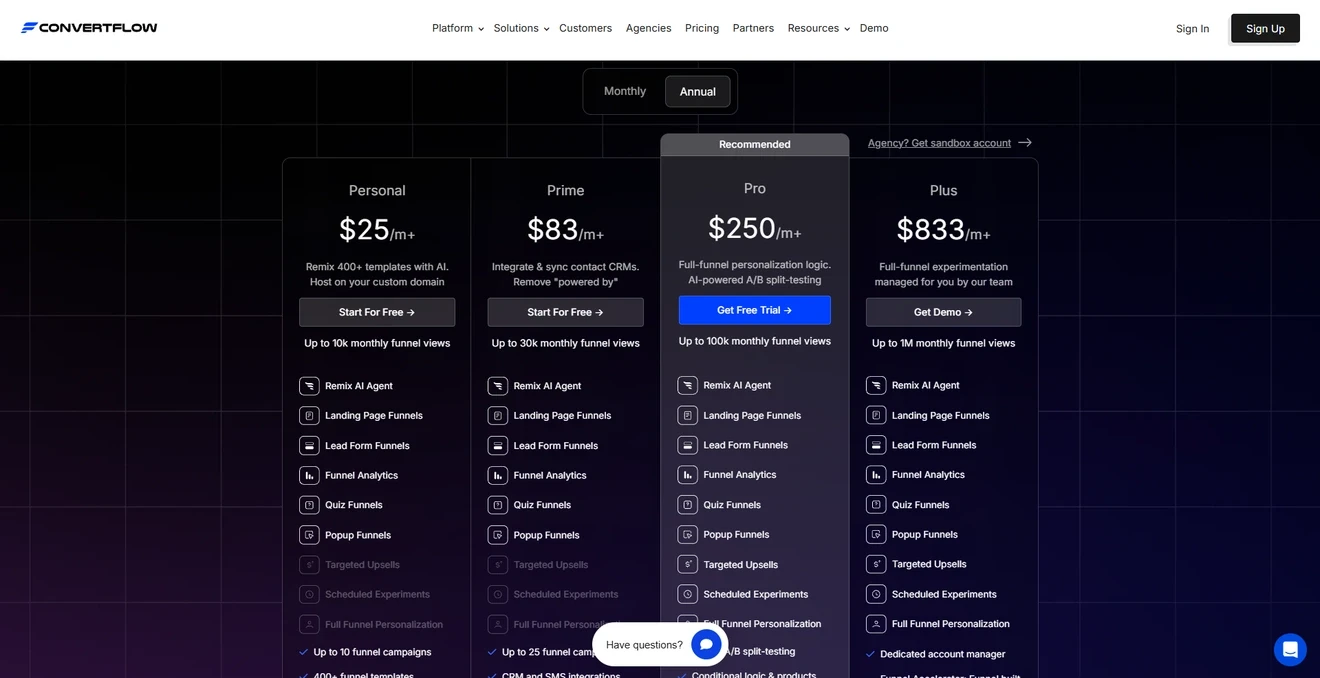
ConvertFlow starts at $25/month for 10,000 funnel views billed annually. Pricing is based on traffic to ConvertFlow funnels, not total website pageviews.
Trade-off: ConvertFlow is more than just a popup platform and may feel excessive if your primary goal is on-site lead capture or cart recovery.
OptinMonster — best for WordPress and publishers
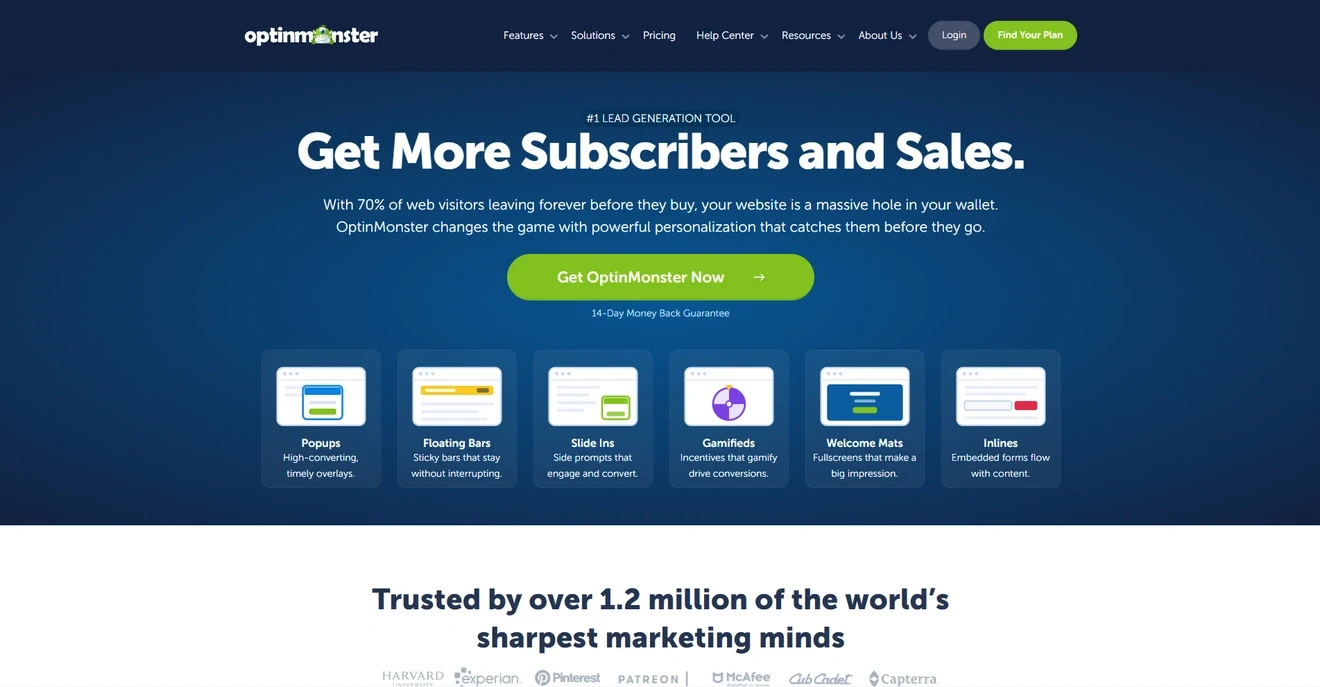
OptinMonster is a lead-generation tool with popups, floating bars, full-screen campaigns, inline forms, and other on-site formats.
Both OptinMonster and OptiMonk have WordPress plugins, but OptinMonster goes deeper into WordPress-specific workflows. It can target campaigns by posts, pages, categories and tags, custom post types, logged-in status, and integrations with plugins such as WooCommerce, MemberPress, and Easy Digital Downloads.

Pricing is more feature-gated than OptiMonk’s. The Plus plan starts at $19/month billed annually and includes A/B testing, while Exit-Intent and revenue attribution start on Pro at $29/month. More advanced ecommerce targeting, including geolocation and returning-visitor targeting, is reserved for Growth.
Trade-off: OptiMonk includes its standard feature set across all plans, while OptinMonster spreads key capabilities across several tiers.
Alia — best for Shopify brands focused on email and SMS list growth
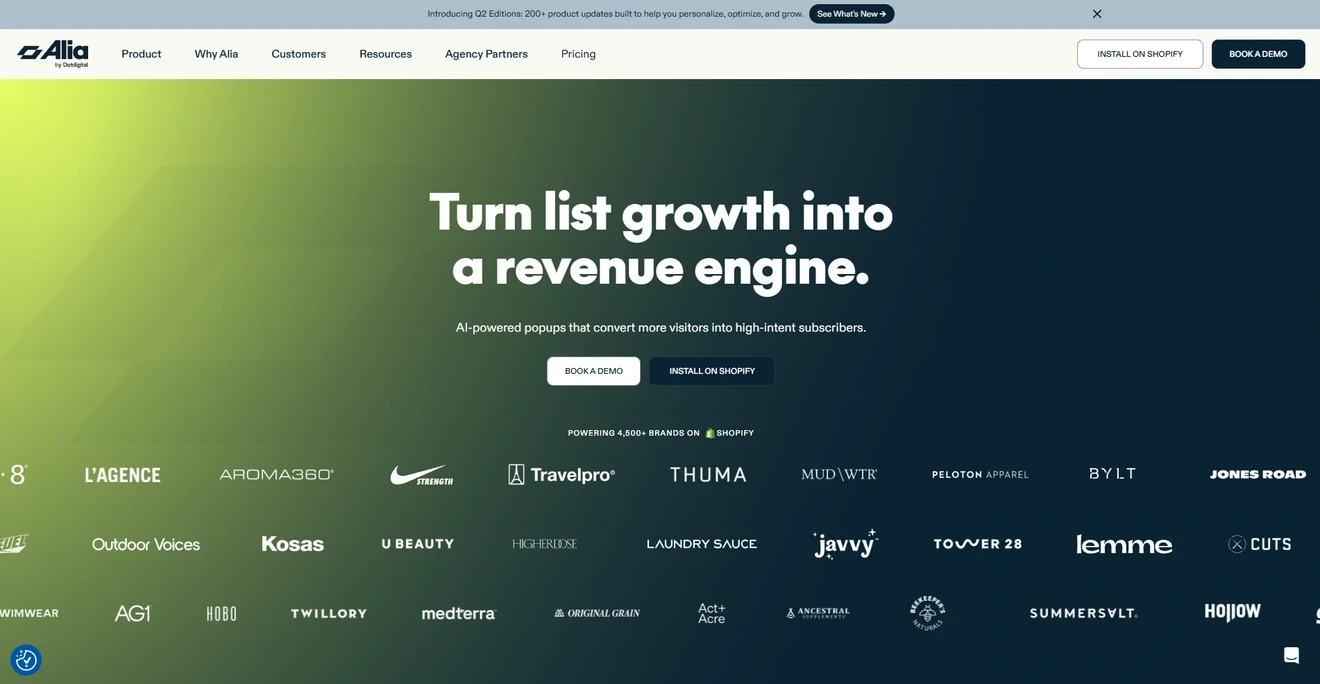
Alia is a Shopify-focused popup platform built around email and SMS capture. Its popups can collect both in one multi-step flow, sync subscribers to tools like Klaviyo, Attentive, and Postscript, and suppress people who are already subscribed.
The main difference from OptiMonk is how much Alia centers the product on continuous popup optimization. Its Prism AI keeps testing popup variants and shifting traffic toward the better-performing versions, while Smart Triggering adjusts when campaigns appear based on visitor behavior.
Alia also offers gamified formats, including Spin-to-Win and scratch cards, plus quiz-style flows for collecting zero-party data.

Pricing starts at $75/month for up to 20,000 monthly visitors on the self-serve plan paid yearly. The fully managed plan starts at $300/month and adds a dedicated customer success manager and managed A/B testing.
Trade-off: Alia is much more specialized around Shopify and list growth, while OptiMonk covers a broader range of onsite personalization and CRO use cases.
How to choose the right OptiMonk alternative
The best choice depends less on the number of features and more on how you plan to use the tool.
Start with your budget. If you want to test popups without committing much, look at tools with a free plan or a low entry price, such as OptiMonk, Claspo, Poptin, or Popupsmart. If you have a larger CRO budget and want more support or automation, Wisepops or Justuno may make more sense.
Match the tool to your ecommerce stack. Shopify-focused businesses may prefer Alia, Privy, Klaviyo Forms, Justuno, or Wisepops, depending on whether the priority is list growth, lifecycle marketing, or advanced CRO. WordPress-heavy businesses should look more closely at OptinMonster.
Think about how mature your conversion program is. Simpler popup builders are usually enough for lead capture, discounts, and cart recovery. If you already run segmentation, quizzes, branching journeys, product recommendations, or structured experiments, tools such as ConvertFlow, Justuno, Wisepops, or Claspo may give you more room to grow.
Decide whether you only need onsite conversion or also email and SMS. Claspo, OptiMonk, Sleeknote, and similar tools focus mainly on what happens on the website. Privy and Klaviyo go further by combining subscriber capture with email and SMS follow-up in the same platform.
Summing up
For email and SMS in one platform, look at Privy or Klaviyo; for funnels and quizzes, ConvertFlow; for advanced ecommerce workflows, Justuno or Wisepops; and for WordPress, OptinMonster.
If your priority is on-site conversion, gamification, and AI that increasingly handles campaign creation and optimization, Claspo is one of the best OptiMonk alternatives. Try it for free. You can also see the differences in more detail in our Claspo vs OptiMonk comparison.
FAQ
What is the best free OptiMonk alternative?
Claspo, Poptin, and Popupsmart all offer free plans, but the limits differ. Claspo includes all features on its free plan, while Poptin and Popupsmart have lower traffic or campaign allowances.
What is the best OptiMonk alternative for WordPress?
OptinMonster is one of the strongest options for WordPress because it supports targeting based on posts, pages, categories, tags, custom post types, logged-in status, and popular WordPress plugins.
Which OptiMonk alternatives include email and SMS?
Privy and Klaviyo are the clearest options if you want subscriber capture, email, and SMS in the same platform. Most other tools in this list focus primarily on onsite conversion and connect to external email and SMS platforms through integrations.
Can I migrate from OptiMonk to another popup tool?
Yes, but campaigns normally need to be recreated rather than transferred automatically. Before switching, check whether the new tool supports the campaign formats, integrations, targeting rules, and data flows you currently rely on. Running both tools in parallel while rebuilding campaigns can reduce disruption.