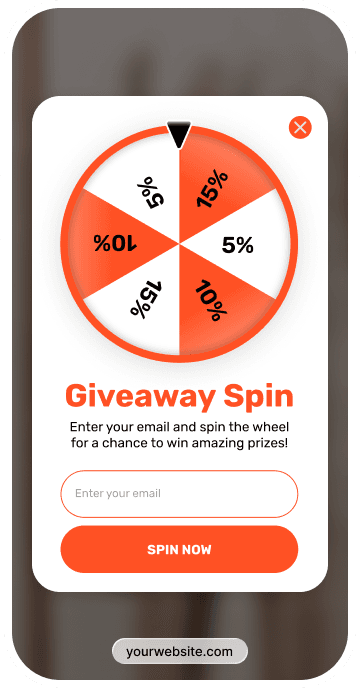
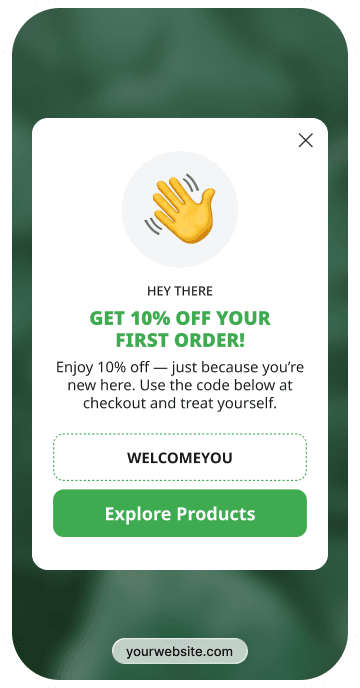
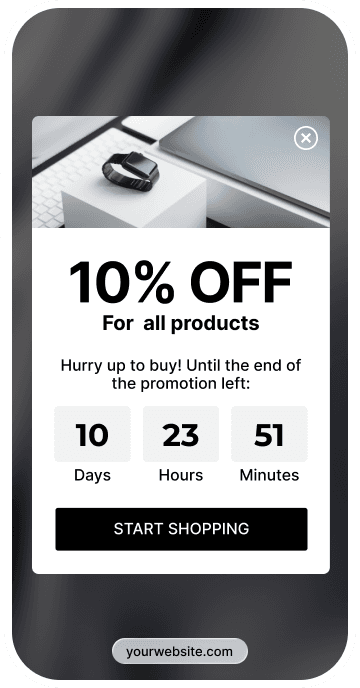
BFCM Strategy Insights
What 4.5M widget views revealed about conversion
Last year, Claspo users launched hundreds of widgets that drove 4.5+ million views. Our study shows why top setups achieved 2× higher conversion: gamified forms hit 23% CR vs. 13% without gamification, and promo widgets kept sales flowing at +17%.
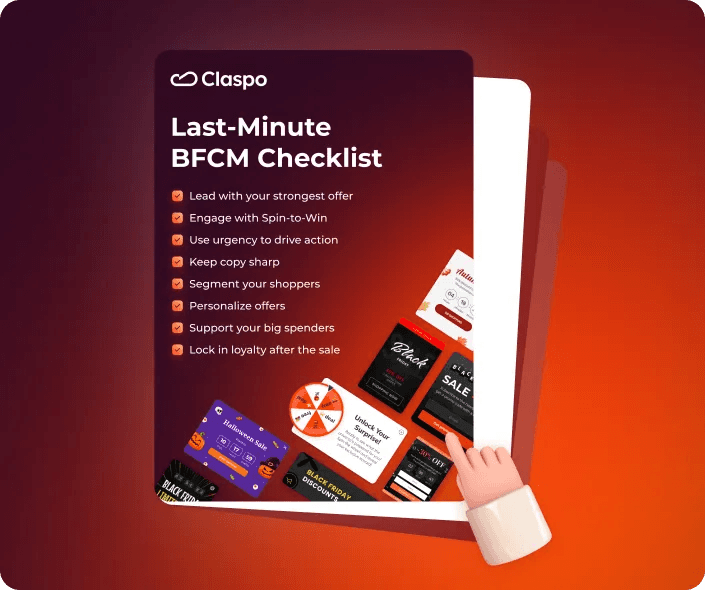
Winning BFCM strategy: pair promos with signups
Black Friday and Cyber Monday are dominated by promotional widgets — last year they made up 86% of all BFCM campaigns run by Claspo users. They drive instant clicks, urgency, and sales at scale.
But there's another layer. Gamified signup forms, though used less often, reached 16-20% conversion rates and built email lists that fueled repeat purchases long after discounts ended.
The winning strategy? Capture customers today, and secure tomorrow's revenue.
Among hundreds of BFCM widgets, most performed modestly. But a smaller group stood out, converting at rates 2× higher. What made the difference? Gamification, instant rewards, clean design, and focused copy.
These aren't just trends — they're repeatable tactics you can apply to win BFCM.
Why we recommend it
Last year, the highest-converting signup forms (10%-35% CR) had one thing in common: most of them used gamification. Average conversion rates of top forms:
With gamification — 23.2%
Without gamification — 13.4%
That's almost a 10-point lift just by adding a game element.
Why we recommend it
Layout: 85.7% popups and 14.3% floating boxes — both grab attention faster than inline or bars.
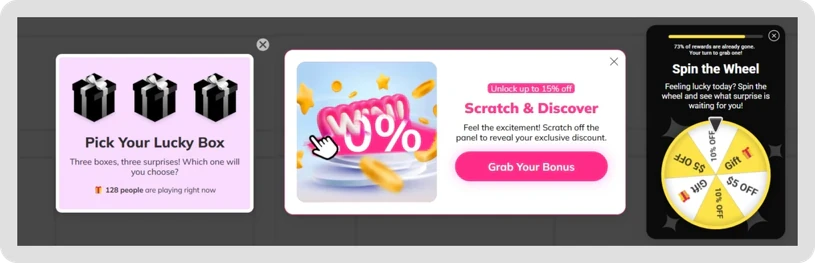
Gamification (Spin the wheel / Scratch card / Pick a gift) — 71.5% of top forms included a game, versus only 25% in the rest.
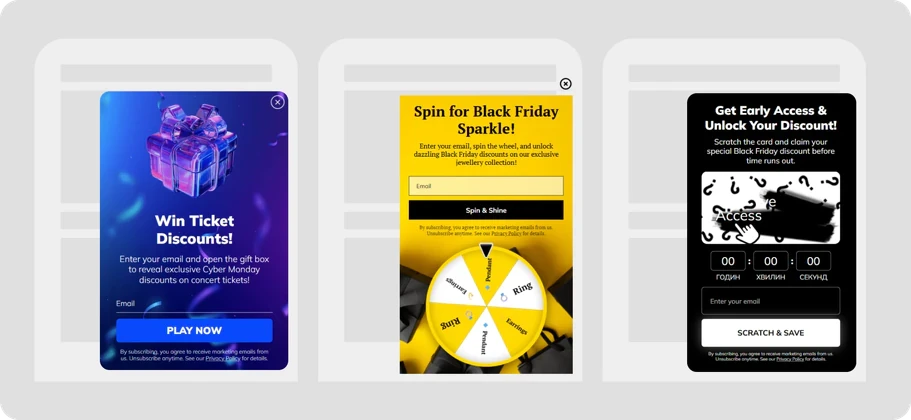
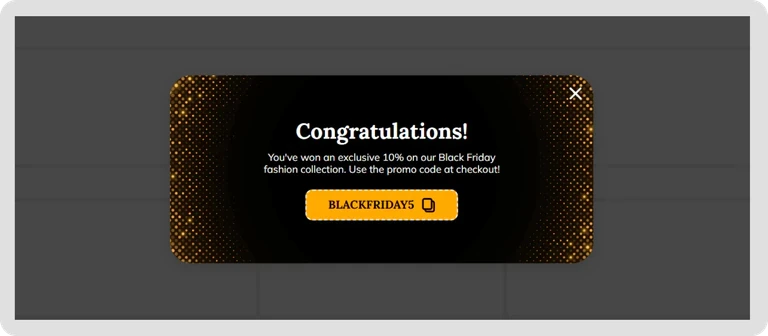
Promo code revealed instantly — more common in top forms (57%) than in generic ones (20%), reinforcing the reward loop.
One simple field (email) — top performers kept forms simple, with 100% using minimal input.
Bold design accents + visuals — 85.7% of top forms used illustrations, compared to 65% of others.
A clear reward (discount or exclusive content) — 100% of top forms rewarded signups.
Why it works
Gamification taps into curiosity and reward-seeking behavior. Shoppers stay longer, interact more, and feel they’ve ‘earned’ their discount. This isn’t just entertainment — it’s a trust-building first step.
Beyond the first purchase
BFCM removes the fear of buying for the first time — the ‘try & trust effect’. Once shoppers cross that line, email keeps the relationship alive. With even minimal data (like gender or product category), you can segment later. With no data at all, you can still re-engage with bestsellers.
Forward-looking insight
Claspo now lets you add gamification not only to forms, but also to promo widgets. If games can drive 20-35% signups, imagine what they’ll do for your sales widgets.
Why we recommend it
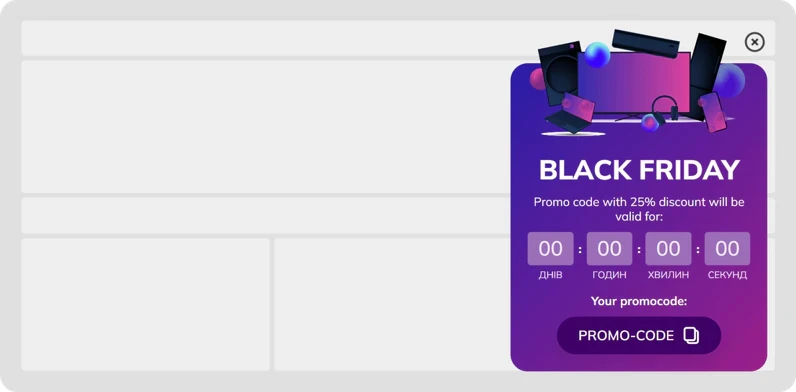
When shoppers see a discount, they weigh options. When they see a discount and a timer, they feel the clock ticking. Almost 50% of the top promo widgets used countdowns paired with promo codes, driving conversion rates above 17%. Widgets featuring both a promo code and a countdown timer reach around 7.57% CTR.
Floating box or popup layout — 44.4% of top widgets were popups and 41.7% floating boxes, both far more effective than bars or inlines. Even beyond top performers, the averages confirm the same trend: popups drive around 7.54% CTR and floating boxes 7.50%, compared to 5.46% for floating bars and just 2.20% for built-in (inline) formats. The layout alone can make or break visibility and engagement.
Countdown timer + promo code — 36.1% of top widgets paired both elements. Generic widgets leaned on promo codes only (48.2%). And this combo works not just for top performers — on average, widgets featuring both a promo code and a countdown timer reach around 7.57% CTR. It’s proof that urgency plus visible reward consistently drives stronger engagement across campaigns of any size.
Clear copy with FOMO — 11.1% of top widgets targeted customer pain points (vs. 1.8% in the rest), making their urgency sharper and more relevant.
Reward variety — top performers mixed discounts (percentage, fixed, BOGO), while others relied only on percentages, which risked feeling generic.
Why it works
A countdown reframes the decision from ‘Should I buy?’ to ‘Will I miss out?’ Adding a promo code adds credibility: the deal feels real and instantly usable.
Beyond the first purchase
Urgency sells fast, but it also shapes perception. Shoppers who respond to a countdown are signaling price sensitivity and time-driven motivation — valuable insights for future targeting. Segment them, and you can retarget later with similar urgency-driven offers.
Forward-looking insight
Don’t rely only on generic percentage discounts. The data shows that variety in rewards (fixed amounts, BOGO, exclusives) keeps offers fresh and believable. Combining them with urgency mechanics is a tested recipe for stronger performance.
Why we recommend it
Last year, 77.8% of top-performing promo widgets used visuals, compared to 67% overall. Almost 40% went further and included lifestyle photos with people, while the rest of the pack barely reached 12.7%.
And the numbers prove why it matters: widgets with visuals averaged 7.27% CTR, while those without dropped to 5.94%. When the image featured people, engagement nearly doubled — 10.11% CTR versus just 5.88% without faces.
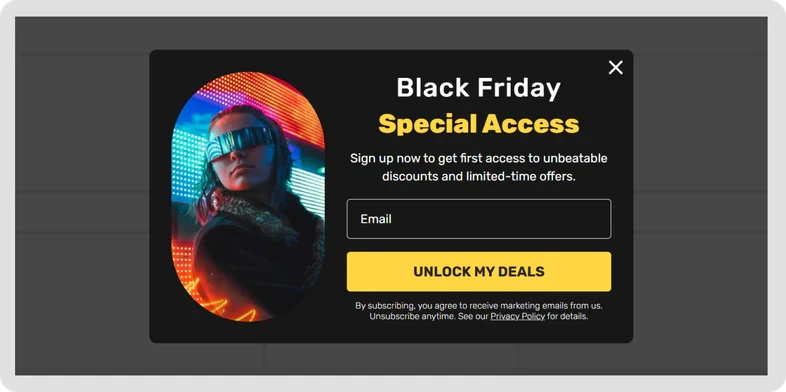
Floating box or popup layout — more noticeable than bars or inline placements.
Lifestyle image with people — emotion and context matter; top widgets used it 3x more often than the rest.
Simple discount — percentage or fixed cuts work best here.
Value-focused copy — clarity and excellence in communication separate top performers from generic ones.
Why it works
It’s the mix of emotion + value. The visual makes the offer believable and desirable, while the clear discount shows exactly what shoppers gain. Together, they move customers from browsing to buying.
Forward-looking insight
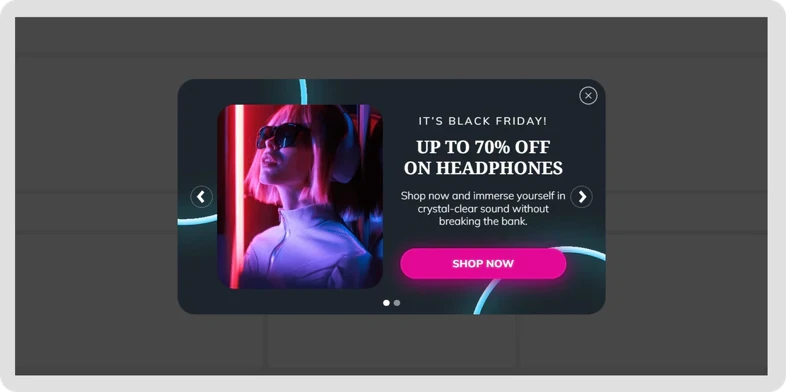
Don’t stop at a single image. With Claspo, you can turn your promo widget into a mini showcase by adding a slider instead of one static visual. Multiple slides let you highlight product variations, pair discounts with lifestyle shots, and create a sense of interaction — shoppers actively flip through, which means more time spent on your offer and higher engagement.
Teasers that save lost conversions
A teaser is a small widget (an icon or badge) that sits on the edge of the screen. If shoppers dismiss your popup or floating box, the teaser stays visible, letting them reopen the offer whenever they’re ready.
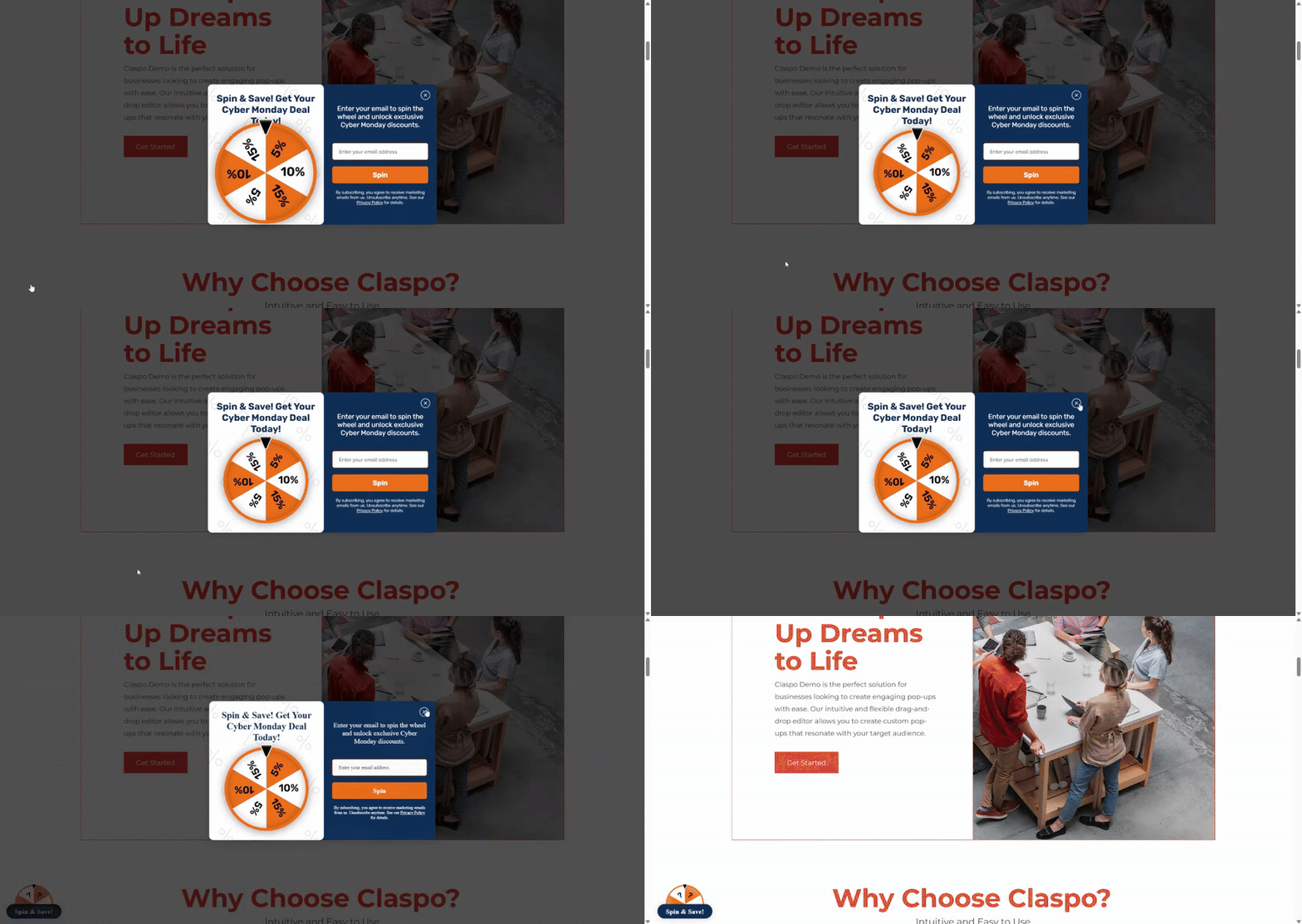
Popup or floating box with an attached teaser
Minimalist design (icon or badge on the screen edge)
Visible but unobtrusive trigger for reopening
Small text or symbol hinting at value
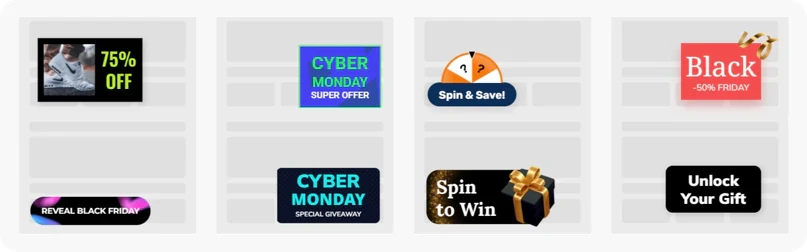
Teasers act as a second chance. If a shopper closes your popup too quickly, the teaser stays behind — ready for them to re-engage when they choose. It improves user experience by putting control in their hands and serves as a backup plan: even if the widget didn’t convert instantly, the teaser brings them back later.
During BFCM 2024, 70% of orders came from mobile devices (Salesforce). On small screens, popups are dismissed faster because they block scrolling. A teaser ‘lives’ quietly on the edge of the screen, always accessible without interrupting the experience. It’s the simplest way to recover mobile shoppers — the majority of your audience during BFCM.
Black Friday and Cyber Monday will fill carts quickly. But the bigger prize is what happens after. A feedback request, a short survey, even a simple follow-up email tells buyers you listened — and keeps them around once the discounts fade.
Gamified signup forms and promo widgets play a smart role too. Beyond driving clicks, they leave you with first signals for segmentation: a hint of product preference, a gender marker, or just a list of bestsellers to recommend. From there, patterns emerge — the kind that help you recognize high-value customers and turn one-time buyers into repeat ones.
Get ready with Claspo now. These recipes help you win the weekend — and carry that momentum long after the banners come down.
Fully designed gamification templates